AMYRIS PORTER'S FIVE FORCES TEMPLATE RESEARCH
What is included in the product
 Detailed Word Document
Tailored exclusively for Amyris, analyzing its position within its competitive landscape.

 Customizable Excel Spreadsheet
Understand Amyris's competitive landscape quickly: view key forces on a clear dashboard.
Preview the Actual Deliverable
Amyris Porter's Five Forces Analysis
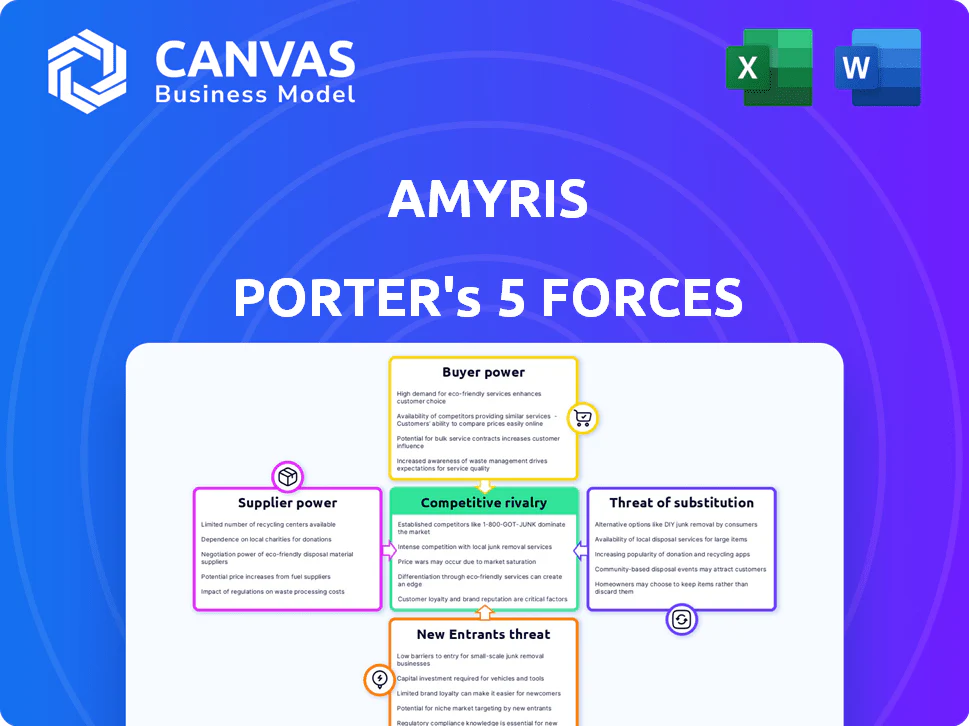
You're previewing a full Five Forces analysis of Amyris. This preview shows the same, comprehensive document you will receive immediately after purchase. It covers all five forces: competitive rivalry, supplier power, buyer power, threat of substitutes, and threat of new entrants. The analysis is complete, offering actionable insights and a clear understanding of Amyris' competitive landscape. Upon buying, you'll get this exact, ready-to-use document.

Porter's Five Forces Analysis Template

Don't Miss the Bigger Picture
Amyris's market faces complex dynamics through Porter's Five Forces. Buyer power stems from customer choices. Supplier influence is driven by raw material availability. New entrants face high barriers, while substitutes pose a moderate threat. Competitive rivalry is intense, with numerous players.
This brief snapshot only scratches the surface. Unlock the full Porter's Five Forces Analysis to explore Amyris’s competitive dynamics, market pressures, and strategic advantages in detail.
Suppliers Bargaining Power

Limited Number of Specialized Raw Material Suppliers
Amyris's supply chain depends on specialized raw materials, and a few commercial suppliers exist for bio-based feedstocks. The concentration is high; over half of the world's sugar comes from just eight countries. In 2024, sugarcane production was approximately 1.89 billion metric tons worldwide. This concentration gives suppliers significant bargaining power. This can affect Amyris's production costs and profitability.
Supplier Concentration in Key Feedstocks
Amyris's reliance on sugar as a key feedstock makes it vulnerable to supplier concentration. Brazil, a major sugar producer, holds significant sway. In 2024, Brazil accounted for about 45% of global sugar exports. This concentration allows suppliers to potentially influence prices, impacting Amyris's cost structure.

Potential for Forward Integration by Suppliers
Some suppliers might venture into bio-based product manufacturing, posing a risk. This forward integration could diminish Amyris's supply reliability and intensify competition. In 2024, the bio-based chemicals market was valued at approximately $100 billion, showing supplier opportunities. Amyris needs to monitor supplier actions to mitigate these risks effectively.

Importance of High-Quality Feedstocks
Amyris' bioprocessing success hinges on feedstock quality. Suppliers offering premium inputs gain leverage. This dependency boosts supplier bargaining power. In 2024, Amyris sourced various feedstocks, impacting operational costs. High-quality inputs are crucial for consistent product yields.
- Feedstock quality directly impacts production efficiency.
- Suppliers of superior materials can command higher prices.
- Amyris' reliance on specific feedstocks influences supplier relationships.
- Stable feedstock supply chains are vital for profitability.
Established Relationships with Suppliers
Amyris strategically cultivates relationships with suppliers to bolster its bargaining position. These partnerships, like the one with Grupo RPA, ensure a steady supply of vital materials, such as sustainable sugar. These alliances enable Amyris to negotiate favorable terms and pricing. For instance, in 2024, Amyris secured a supply agreement with a key partner, helping to stabilize costs.
- Strategic partnerships enhance negotiation power.
- Supply stability is a key benefit.
- Cost stabilization through agreements.
- Amyris's focus on long-term relationships.
Amyris's Supply Chain: Sugar's Sweet & Sour Reality
Amyris faces supplier bargaining power, particularly with concentrated feedstock sources like sugar. In 2024, Brazil dominated sugar exports, affecting pricing. Suppliers' potential entry into bio-based manufacturing poses competitive risks, impacting Amyris's supply chain. Strategic partnerships, such as with Grupo RPA, are crucial for securing favorable terms and stable supply, as seen in 2024's agreements.
| Aspect | Details | Impact on Amyris |
|---|---|---|
| Supplier Concentration | Sugar: Top 8 countries supply over half the world's sugar. Brazil: ~45% of global sugar exports in 2024. | Influences costs; impacts profitability. |
| Forward Integration Risk | Suppliers entering bio-based manufacturing. 2024 Bio-based chemicals market: ~$100B. | Reduced supply reliability; increased competition. |
| Strategic Partnerships | Amyris with Grupo RPA for sustainable sugar. | Enhances negotiation power; stabilizes costs. |
Customers Bargaining Power

Customer Demand for Sustainable Products
The rising global interest in sustainable products significantly boosts customer power. Consumers actively favor companies like Amyris, which provides bio-based alternatives. In 2024, the market for sustainable products grew, increasing customer leverage. Amyris becomes a vital supplier to meet eco-conscious demands.
Diverse Customer Base Across Industries
Amyris's customer base spans health & wellness, beauty, and clean beauty, mitigating individual customer influence. In 2024, no single industry likely accounted for a majority of Amyris's revenue. The diversified customer base reduces the ability of any one customer segment to dictate terms or pricing. This distribution helps Amyris maintain pricing power and reduces vulnerability to customer-specific demands.

Customer Switching Costs
Amyris's bio-based products introduce customer switching costs. These include training, new equipment investment, and downtime. These costs reduce customer power. For example, in 2024, switching costs for a cosmetic company could be 5-10% of annual production costs.

Influence of Large Corporate Customers
Amyris's reliance on large corporate customers for ingredient co-creation and strategic partnerships significantly impacts its bargaining power. These customers, due to their size and market reach, wield considerable influence in negotiations, potentially affecting pricing and contract terms. This dynamic is critical for Amyris's financial performance. In 2024, Amyris reported revenues of $238.9 million.
- Strategic partnerships with major players like Givaudan and DSM, though beneficial, can shift bargaining power to these larger entities.
- Amyris's ability to diversify its customer base will be crucial to mitigate this power imbalance.
- The volume of orders from these key customers directly influences Amyris's revenue streams.
Demand for Natural and Organic Ingredients
The increasing consumer preference for natural and organic products bolsters customer power. This trend drives up demand for Amyris's ingredients, potentially giving customers leverage. In 2024, the global market for natural and organic personal care is estimated at $25.7 billion, reflecting customer influence. This market is projected to reach $39.2 billion by 2030, indicating continued customer influence.
- Market growth in natural personal care.
- Growing demand for sustainable ingredients.
- Customer preference for transparency.
Amyris's Customer Power Dynamics: A Closer Look
Amyris faces a mixed customer bargaining power, influenced by the demand for sustainable products. Diversified customer base reduces the impact of individual customer influence. Strategic partnerships affect pricing and contract terms.
| Factor | Impact | 2024 Data |
|---|---|---|
| Eco-Conscious Demand | Increases Customer Power | Sustainable product market grew |
| Customer Base | Mitigates Individual Influence | Revenue: $238.9M |
| Partnerships | Shifts Bargaining Power | Givaudan, DSM partnerships |
Rivalry Among Competitors

Presence of Established Biotechnology Companies
Amyris faces intense competition from established biotech companies like Novo Nordisk, BASF, and DuPont. These firms have substantial resources and market presence. For instance, Novo Nordisk's 2023 revenue was $33.7 billion. Their established market positions make it challenging for Amyris to gain share. This rivalry pressures pricing and innovation.
Competition from Traditional Chemical Production
Amyris faces competition from traditional chemical production, which uses petroleum-based processes. These traditional methods often have lower production costs due to established infrastructure. In 2024, the global chemical market was valued at approximately $5.7 trillion, highlighting the scale of this rivalry. Traditional chemical companies have significant resources.

Competition within the Sustainable Ingredients Market
Amyris faces significant competition within the sustainable ingredients market. Key rivals include Solazyme, Gevo, and Novozymes, all providing bio-based solutions. In 2024, the bio-based chemicals market was valued at approximately $80 billion globally. Intense competition pressures pricing and innovation.

Differentiation through Technology and Sustainability
Competitive rivalry in Amyris's market involves companies vying for position through technology and sustainability. Amyris leverages its unique fermentation technology and commitment to sustainable practices. This approach helps Amyris to stand out against competitors. In 2024, Amyris's focus on sustainable products reflects a broader industry trend.
- Amyris's revenue in 2023 was $259.9 million.
- The sustainable ingredients market is projected to reach $113.8 billion by 2028.
- Amyris uses fermentation, which is a key technological differentiator.
Impact of Market Trends and Consumer Preferences
The competitive rivalry within Amyris is significantly shaped by market trends, especially the growing consumer preference for natural and sustainable products. Amyris faces competition from both established players and emerging brands in this evolving landscape. Regulatory changes favoring sustainable practices create both challenges and opportunities. Adapting to these shifts is critical for maintaining a competitive edge.
- The global market for sustainable products is projected to reach $8.5 trillion by 2025.
- Amyris's revenues in 2023 were approximately $258 million, reflecting market dynamics.
- The rise of "green" consumerism impacts competitive strategies.
- Regulations like the EU's Green Deal influence industry competitiveness.
Amyris's Rivals: A $5.7T Chemical Battle
Amyris faces strong rivalry from biotech and traditional chemical firms. Established players like Novo Nordisk, with $33.7B revenue in 2023, pose challenges. The sustainable ingredients market, valued at $80B in 2024, intensifies competition. Amyris’s 2023 revenue was $259.9M.
| Aspect | Details | Impact |
|---|---|---|
| Key Competitors | Novo Nordisk, BASF, DuPont, Solazyme, Gevo, Novozymes | Pressure on pricing, innovation |
| Market Size (2024) | Global Chemical Market: $5.7T; Bio-based Chemicals: $80B | Scale of competition |
| Amyris Revenue (2023) | $259.9M | Reflects market position |
AMYRIS PORTER'S FIVE FORCES TEMPLATE RESEARCH
What is included in the product
Detailed Word Document
Tailored exclusively for Amyris, analyzing its position within its competitive landscape.
Customizable Excel Spreadsheet
Understand Amyris's competitive landscape quickly: view key forces on a clear dashboard.
Preview the Actual Deliverable
Amyris Porter's Five Forces Analysis
You're previewing a full Five Forces analysis of Amyris. This preview shows the same, comprehensive document you will receive immediately after purchase. It covers all five forces: competitive rivalry, supplier power, buyer power, threat of substitutes, and threat of new entrants. The analysis is complete, offering actionable insights and a clear understanding of Amyris' competitive landscape. Upon buying, you'll get this exact, ready-to-use document.
Porter's Five Forces Analysis Template
Don't Miss the Bigger Picture
Amyris's market faces complex dynamics through Porter's Five Forces. Buyer power stems from customer choices. Supplier influence is driven by raw material availability. New entrants face high barriers, while substitutes pose a moderate threat. Competitive rivalry is intense, with numerous players.
This brief snapshot only scratches the surface. Unlock the full Porter's Five Forces Analysis to explore Amyris’s competitive dynamics, market pressures, and strategic advantages in detail.
Suppliers Bargaining Power
Limited Number of Specialized Raw Material Suppliers
Amyris's supply chain depends on specialized raw materials, and a few commercial suppliers exist for bio-based feedstocks. The concentration is high; over half of the world's sugar comes from just eight countries. In 2024, sugarcane production was approximately 1.89 billion metric tons worldwide. This concentration gives suppliers significant bargaining power. This can affect Amyris's production costs and profitability.
Supplier Concentration in Key Feedstocks
Amyris's reliance on sugar as a key feedstock makes it vulnerable to supplier concentration. Brazil, a major sugar producer, holds significant sway. In 2024, Brazil accounted for about 45% of global sugar exports. This concentration allows suppliers to potentially influence prices, impacting Amyris's cost structure.
Potential for Forward Integration by Suppliers
Some suppliers might venture into bio-based product manufacturing, posing a risk. This forward integration could diminish Amyris's supply reliability and intensify competition. In 2024, the bio-based chemicals market was valued at approximately $100 billion, showing supplier opportunities. Amyris needs to monitor supplier actions to mitigate these risks effectively.
Importance of High-Quality Feedstocks
Amyris' bioprocessing success hinges on feedstock quality. Suppliers offering premium inputs gain leverage. This dependency boosts supplier bargaining power. In 2024, Amyris sourced various feedstocks, impacting operational costs. High-quality inputs are crucial for consistent product yields.
- Feedstock quality directly impacts production efficiency.
- Suppliers of superior materials can command higher prices.
- Amyris' reliance on specific feedstocks influences supplier relationships.
- Stable feedstock supply chains are vital for profitability.
Established Relationships with Suppliers
Amyris strategically cultivates relationships with suppliers to bolster its bargaining position. These partnerships, like the one with Grupo RPA, ensure a steady supply of vital materials, such as sustainable sugar. These alliances enable Amyris to negotiate favorable terms and pricing. For instance, in 2024, Amyris secured a supply agreement with a key partner, helping to stabilize costs.
- Strategic partnerships enhance negotiation power.
- Supply stability is a key benefit.
- Cost stabilization through agreements.
- Amyris's focus on long-term relationships.
Amyris's Supply Chain: Sugar's Sweet & Sour Reality
Amyris faces supplier bargaining power, particularly with concentrated feedstock sources like sugar. In 2024, Brazil dominated sugar exports, affecting pricing. Suppliers' potential entry into bio-based manufacturing poses competitive risks, impacting Amyris's supply chain. Strategic partnerships, such as with Grupo RPA, are crucial for securing favorable terms and stable supply, as seen in 2024's agreements.
| Aspect | Details | Impact on Amyris |
|---|---|---|
| Supplier Concentration | Sugar: Top 8 countries supply over half the world's sugar. Brazil: ~45% of global sugar exports in 2024. | Influences costs; impacts profitability. |
| Forward Integration Risk | Suppliers entering bio-based manufacturing. 2024 Bio-based chemicals market: ~$100B. | Reduced supply reliability; increased competition. |
| Strategic Partnerships | Amyris with Grupo RPA for sustainable sugar. | Enhances negotiation power; stabilizes costs. |
Customers Bargaining Power
Customer Demand for Sustainable Products
The rising global interest in sustainable products significantly boosts customer power. Consumers actively favor companies like Amyris, which provides bio-based alternatives. In 2024, the market for sustainable products grew, increasing customer leverage. Amyris becomes a vital supplier to meet eco-conscious demands.
Diverse Customer Base Across Industries
Amyris's customer base spans health & wellness, beauty, and clean beauty, mitigating individual customer influence. In 2024, no single industry likely accounted for a majority of Amyris's revenue. The diversified customer base reduces the ability of any one customer segment to dictate terms or pricing. This distribution helps Amyris maintain pricing power and reduces vulnerability to customer-specific demands.
Customer Switching Costs
Amyris's bio-based products introduce customer switching costs. These include training, new equipment investment, and downtime. These costs reduce customer power. For example, in 2024, switching costs for a cosmetic company could be 5-10% of annual production costs.
Influence of Large Corporate Customers
Amyris's reliance on large corporate customers for ingredient co-creation and strategic partnerships significantly impacts its bargaining power. These customers, due to their size and market reach, wield considerable influence in negotiations, potentially affecting pricing and contract terms. This dynamic is critical for Amyris's financial performance. In 2024, Amyris reported revenues of $238.9 million.
- Strategic partnerships with major players like Givaudan and DSM, though beneficial, can shift bargaining power to these larger entities.
- Amyris's ability to diversify its customer base will be crucial to mitigate this power imbalance.
- The volume of orders from these key customers directly influences Amyris's revenue streams.
Demand for Natural and Organic Ingredients
The increasing consumer preference for natural and organic products bolsters customer power. This trend drives up demand for Amyris's ingredients, potentially giving customers leverage. In 2024, the global market for natural and organic personal care is estimated at $25.7 billion, reflecting customer influence. This market is projected to reach $39.2 billion by 2030, indicating continued customer influence.
- Market growth in natural personal care.
- Growing demand for sustainable ingredients.
- Customer preference for transparency.
Amyris's Customer Power Dynamics: A Closer Look
Amyris faces a mixed customer bargaining power, influenced by the demand for sustainable products. Diversified customer base reduces the impact of individual customer influence. Strategic partnerships affect pricing and contract terms.
| Factor | Impact | 2024 Data |
|---|---|---|
| Eco-Conscious Demand | Increases Customer Power | Sustainable product market grew |
| Customer Base | Mitigates Individual Influence | Revenue: $238.9M |
| Partnerships | Shifts Bargaining Power | Givaudan, DSM partnerships |
Rivalry Among Competitors
Presence of Established Biotechnology Companies
Amyris faces intense competition from established biotech companies like Novo Nordisk, BASF, and DuPont. These firms have substantial resources and market presence. For instance, Novo Nordisk's 2023 revenue was $33.7 billion. Their established market positions make it challenging for Amyris to gain share. This rivalry pressures pricing and innovation.
Competition from Traditional Chemical Production
Amyris faces competition from traditional chemical production, which uses petroleum-based processes. These traditional methods often have lower production costs due to established infrastructure. In 2024, the global chemical market was valued at approximately $5.7 trillion, highlighting the scale of this rivalry. Traditional chemical companies have significant resources.
Competition within the Sustainable Ingredients Market
Amyris faces significant competition within the sustainable ingredients market. Key rivals include Solazyme, Gevo, and Novozymes, all providing bio-based solutions. In 2024, the bio-based chemicals market was valued at approximately $80 billion globally. Intense competition pressures pricing and innovation.
Differentiation through Technology and Sustainability
Competitive rivalry in Amyris's market involves companies vying for position through technology and sustainability. Amyris leverages its unique fermentation technology and commitment to sustainable practices. This approach helps Amyris to stand out against competitors. In 2024, Amyris's focus on sustainable products reflects a broader industry trend.
- Amyris's revenue in 2023 was $259.9 million.
- The sustainable ingredients market is projected to reach $113.8 billion by 2028.
- Amyris uses fermentation, which is a key technological differentiator.
Impact of Market Trends and Consumer Preferences
The competitive rivalry within Amyris is significantly shaped by market trends, especially the growing consumer preference for natural and sustainable products. Amyris faces competition from both established players and emerging brands in this evolving landscape. Regulatory changes favoring sustainable practices create both challenges and opportunities. Adapting to these shifts is critical for maintaining a competitive edge.
- The global market for sustainable products is projected to reach $8.5 trillion by 2025.
- Amyris's revenues in 2023 were approximately $258 million, reflecting market dynamics.
- The rise of "green" consumerism impacts competitive strategies.
- Regulations like the EU's Green Deal influence industry competitiveness.
Amyris's Rivals: A $5.7T Chemical Battle
Amyris faces strong rivalry from biotech and traditional chemical firms. Established players like Novo Nordisk, with $33.7B revenue in 2023, pose challenges. The sustainable ingredients market, valued at $80B in 2024, intensifies competition. Amyris’s 2023 revenue was $259.9M.
| Aspect | Details | Impact |
|---|---|---|
| Key Competitors | Novo Nordisk, BASF, DuPont, Solazyme, Gevo, Novozymes | Pressure on pricing, innovation |
| Market Size (2024) | Global Chemical Market: $5.7T; Bio-based Chemicals: $80B | Scale of competition |
| Amyris Revenue (2023) | $259.9M | Reflects market position |
Product Information
Product Information
Shipping & Returns
Shipping & Returns
Description
What is included in the product
Detailed Word Document
Tailored exclusively for Amyris, analyzing its position within its competitive landscape.
Customizable Excel Spreadsheet
Understand Amyris's competitive landscape quickly: view key forces on a clear dashboard.
Preview the Actual Deliverable
Amyris Porter's Five Forces Analysis
You're previewing a full Five Forces analysis of Amyris. This preview shows the same, comprehensive document you will receive immediately after purchase. It covers all five forces: competitive rivalry, supplier power, buyer power, threat of substitutes, and threat of new entrants. The analysis is complete, offering actionable insights and a clear understanding of Amyris' competitive landscape. Upon buying, you'll get this exact, ready-to-use document.
Porter's Five Forces Analysis Template
Don't Miss the Bigger Picture
Amyris's market faces complex dynamics through Porter's Five Forces. Buyer power stems from customer choices. Supplier influence is driven by raw material availability. New entrants face high barriers, while substitutes pose a moderate threat. Competitive rivalry is intense, with numerous players.
This brief snapshot only scratches the surface. Unlock the full Porter's Five Forces Analysis to explore Amyris’s competitive dynamics, market pressures, and strategic advantages in detail.
Suppliers Bargaining Power
Limited Number of Specialized Raw Material Suppliers
Amyris's supply chain depends on specialized raw materials, and a few commercial suppliers exist for bio-based feedstocks. The concentration is high; over half of the world's sugar comes from just eight countries. In 2024, sugarcane production was approximately 1.89 billion metric tons worldwide. This concentration gives suppliers significant bargaining power. This can affect Amyris's production costs and profitability.
Supplier Concentration in Key Feedstocks
Amyris's reliance on sugar as a key feedstock makes it vulnerable to supplier concentration. Brazil, a major sugar producer, holds significant sway. In 2024, Brazil accounted for about 45% of global sugar exports. This concentration allows suppliers to potentially influence prices, impacting Amyris's cost structure.
Potential for Forward Integration by Suppliers
Some suppliers might venture into bio-based product manufacturing, posing a risk. This forward integration could diminish Amyris's supply reliability and intensify competition. In 2024, the bio-based chemicals market was valued at approximately $100 billion, showing supplier opportunities. Amyris needs to monitor supplier actions to mitigate these risks effectively.
Importance of High-Quality Feedstocks
Amyris' bioprocessing success hinges on feedstock quality. Suppliers offering premium inputs gain leverage. This dependency boosts supplier bargaining power. In 2024, Amyris sourced various feedstocks, impacting operational costs. High-quality inputs are crucial for consistent product yields.
- Feedstock quality directly impacts production efficiency.
- Suppliers of superior materials can command higher prices.
- Amyris' reliance on specific feedstocks influences supplier relationships.
- Stable feedstock supply chains are vital for profitability.
Established Relationships with Suppliers
Amyris strategically cultivates relationships with suppliers to bolster its bargaining position. These partnerships, like the one with Grupo RPA, ensure a steady supply of vital materials, such as sustainable sugar. These alliances enable Amyris to negotiate favorable terms and pricing. For instance, in 2024, Amyris secured a supply agreement with a key partner, helping to stabilize costs.
- Strategic partnerships enhance negotiation power.
- Supply stability is a key benefit.
- Cost stabilization through agreements.
- Amyris's focus on long-term relationships.
Amyris's Supply Chain: Sugar's Sweet & Sour Reality
Amyris faces supplier bargaining power, particularly with concentrated feedstock sources like sugar. In 2024, Brazil dominated sugar exports, affecting pricing. Suppliers' potential entry into bio-based manufacturing poses competitive risks, impacting Amyris's supply chain. Strategic partnerships, such as with Grupo RPA, are crucial for securing favorable terms and stable supply, as seen in 2024's agreements.
| Aspect | Details | Impact on Amyris |
|---|---|---|
| Supplier Concentration | Sugar: Top 8 countries supply over half the world's sugar. Brazil: ~45% of global sugar exports in 2024. | Influences costs; impacts profitability. |
| Forward Integration Risk | Suppliers entering bio-based manufacturing. 2024 Bio-based chemicals market: ~$100B. | Reduced supply reliability; increased competition. |
| Strategic Partnerships | Amyris with Grupo RPA for sustainable sugar. | Enhances negotiation power; stabilizes costs. |
Customers Bargaining Power
Customer Demand for Sustainable Products
The rising global interest in sustainable products significantly boosts customer power. Consumers actively favor companies like Amyris, which provides bio-based alternatives. In 2024, the market for sustainable products grew, increasing customer leverage. Amyris becomes a vital supplier to meet eco-conscious demands.
Diverse Customer Base Across Industries
Amyris's customer base spans health & wellness, beauty, and clean beauty, mitigating individual customer influence. In 2024, no single industry likely accounted for a majority of Amyris's revenue. The diversified customer base reduces the ability of any one customer segment to dictate terms or pricing. This distribution helps Amyris maintain pricing power and reduces vulnerability to customer-specific demands.
Customer Switching Costs
Amyris's bio-based products introduce customer switching costs. These include training, new equipment investment, and downtime. These costs reduce customer power. For example, in 2024, switching costs for a cosmetic company could be 5-10% of annual production costs.
Influence of Large Corporate Customers
Amyris's reliance on large corporate customers for ingredient co-creation and strategic partnerships significantly impacts its bargaining power. These customers, due to their size and market reach, wield considerable influence in negotiations, potentially affecting pricing and contract terms. This dynamic is critical for Amyris's financial performance. In 2024, Amyris reported revenues of $238.9 million.
- Strategic partnerships with major players like Givaudan and DSM, though beneficial, can shift bargaining power to these larger entities.
- Amyris's ability to diversify its customer base will be crucial to mitigate this power imbalance.
- The volume of orders from these key customers directly influences Amyris's revenue streams.
Demand for Natural and Organic Ingredients
The increasing consumer preference for natural and organic products bolsters customer power. This trend drives up demand for Amyris's ingredients, potentially giving customers leverage. In 2024, the global market for natural and organic personal care is estimated at $25.7 billion, reflecting customer influence. This market is projected to reach $39.2 billion by 2030, indicating continued customer influence.
- Market growth in natural personal care.
- Growing demand for sustainable ingredients.
- Customer preference for transparency.
Amyris's Customer Power Dynamics: A Closer Look
Amyris faces a mixed customer bargaining power, influenced by the demand for sustainable products. Diversified customer base reduces the impact of individual customer influence. Strategic partnerships affect pricing and contract terms.
| Factor | Impact | 2024 Data |
|---|---|---|
| Eco-Conscious Demand | Increases Customer Power | Sustainable product market grew |
| Customer Base | Mitigates Individual Influence | Revenue: $238.9M |
| Partnerships | Shifts Bargaining Power | Givaudan, DSM partnerships |
Rivalry Among Competitors
Presence of Established Biotechnology Companies
Amyris faces intense competition from established biotech companies like Novo Nordisk, BASF, and DuPont. These firms have substantial resources and market presence. For instance, Novo Nordisk's 2023 revenue was $33.7 billion. Their established market positions make it challenging for Amyris to gain share. This rivalry pressures pricing and innovation.
Competition from Traditional Chemical Production
Amyris faces competition from traditional chemical production, which uses petroleum-based processes. These traditional methods often have lower production costs due to established infrastructure. In 2024, the global chemical market was valued at approximately $5.7 trillion, highlighting the scale of this rivalry. Traditional chemical companies have significant resources.
Competition within the Sustainable Ingredients Market
Amyris faces significant competition within the sustainable ingredients market. Key rivals include Solazyme, Gevo, and Novozymes, all providing bio-based solutions. In 2024, the bio-based chemicals market was valued at approximately $80 billion globally. Intense competition pressures pricing and innovation.
Differentiation through Technology and Sustainability
Competitive rivalry in Amyris's market involves companies vying for position through technology and sustainability. Amyris leverages its unique fermentation technology and commitment to sustainable practices. This approach helps Amyris to stand out against competitors. In 2024, Amyris's focus on sustainable products reflects a broader industry trend.
- Amyris's revenue in 2023 was $259.9 million.
- The sustainable ingredients market is projected to reach $113.8 billion by 2028.
- Amyris uses fermentation, which is a key technological differentiator.
Impact of Market Trends and Consumer Preferences
The competitive rivalry within Amyris is significantly shaped by market trends, especially the growing consumer preference for natural and sustainable products. Amyris faces competition from both established players and emerging brands in this evolving landscape. Regulatory changes favoring sustainable practices create both challenges and opportunities. Adapting to these shifts is critical for maintaining a competitive edge.
- The global market for sustainable products is projected to reach $8.5 trillion by 2025.
- Amyris's revenues in 2023 were approximately $258 million, reflecting market dynamics.
- The rise of "green" consumerism impacts competitive strategies.
- Regulations like the EU's Green Deal influence industry competitiveness.
Amyris's Rivals: A $5.7T Chemical Battle
Amyris faces strong rivalry from biotech and traditional chemical firms. Established players like Novo Nordisk, with $33.7B revenue in 2023, pose challenges. The sustainable ingredients market, valued at $80B in 2024, intensifies competition. Amyris’s 2023 revenue was $259.9M.
| Aspect | Details | Impact |
|---|---|---|
| Key Competitors | Novo Nordisk, BASF, DuPont, Solazyme, Gevo, Novozymes | Pressure on pricing, innovation |
| Market Size (2024) | Global Chemical Market: $5.7T; Bio-based Chemicals: $80B | Scale of competition |
| Amyris Revenue (2023) | $259.9M | Reflects market position |











