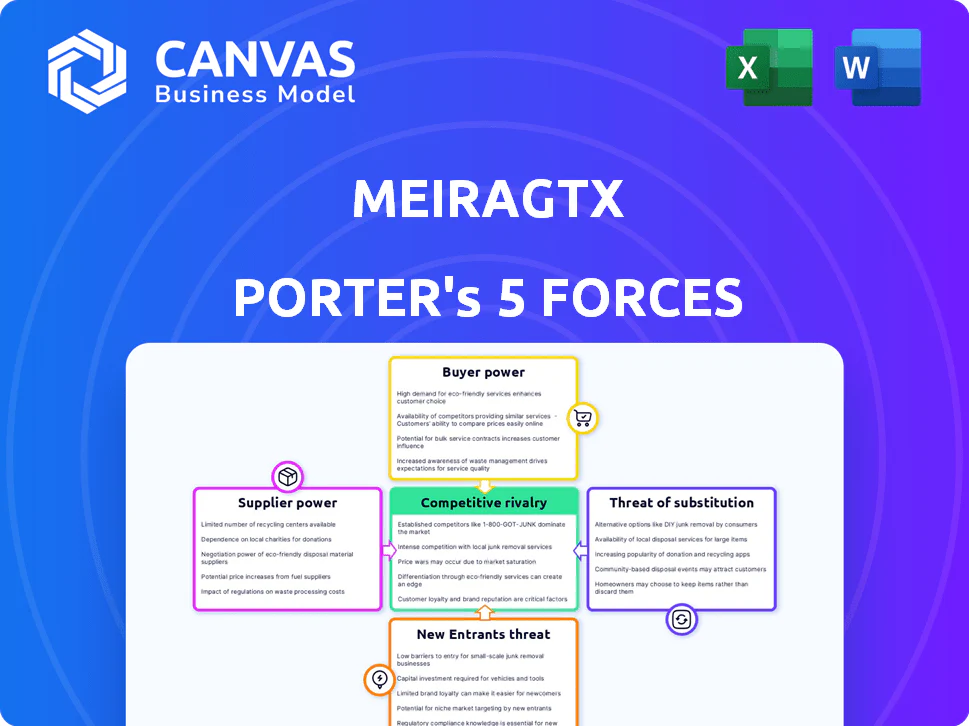
MEIRAGTX PORTER'S FIVE FORCES TEMPLATE RESEARCH
What is included in the product
 Detailed Word Document
Provides a tailored assessment of MeiraGTx's competitive standing, identifying key industry pressures.

 Customizable Excel Spreadsheet
Identify and mitigate risks with a dynamic, interactive analysis of market forces.
What You See Is What You Get
MeiraGTx Porter's Five Forces Analysis
You're previewing the final version—the exact MeiraGTx Porter's Five Forces analysis you'll download immediately after purchase. It thoroughly examines industry competition, supplier power, and potential threats. This document analyzes buyer power and the possibility of new entrants, all within the company context. The preview provides a detailed understanding—fully formatted and ready for your use.

Porter's Five Forces Analysis Template

A Must-Have Tool for Decision-Makers
MeiraGTx operates in the complex gene therapy landscape, facing unique competitive pressures. The threat of new entrants looms large, driven by technological advancements and substantial funding. Bargaining power of suppliers, like specialized research institutions, can impact profitability. Buyer power, influenced by patient advocacy groups and payers, also needs strategic consideration. The threat of substitute therapies, particularly in-development treatments, adds another layer of challenge. Understanding these forces is crucial for investment decisions.
Ready to move beyond the basics? Get a full strategic breakdown of MeiraGTx’s market position, competitive intensity, and external threats—all in one powerful analysis.
Suppliers Bargaining Power

Limited Number of Specialized Suppliers
In the gene therapy sector, MeiraGTx faces supplier bargaining power challenges due to the reliance on specialized components. The limited availability of crucial elements like plasmid DNA and viral vectors elevates supplier influence. This scenario allows suppliers to potentially dictate prices and terms, affecting MeiraGTx's cost structure. To counter this, MeiraGTx has invested in internal manufacturing, which could offer greater control and reduce reliance on external suppliers. In 2024, the global gene therapy market was valued at approximately $6 billion.
High Switching Costs
In the biotechnology sector, switching suppliers is costly. MeiraGTx faces high switching costs due to re-validation and testing for regulatory compliance. This difficulty and expense increases supplier power. For example, in 2024, the average validation process cost for a new raw material supplier in biotech was around $50,000.

Unique Expertise of Suppliers
Suppliers in gene therapy, like Lonza and Thermo Fisher, hold strong bargaining power due to their unique expertise. They offer advanced manufacturing and R&D capabilities. For instance, Thermo Fisher's revenue in 2024 was approximately $42 billion, reflecting its market influence. Their specialized knowledge is essential.

Proprietary Technologies Held by Suppliers
Suppliers with proprietary technologies, like unique viral vectors, can wield significant bargaining power over MeiraGTx. This control can restrict MeiraGTx's choices, making them reliant on specific suppliers. MeiraGTx has been strategically developing its own technology and manufacturing to lessen this dependence. This proactive approach aims to enhance control and reduce supplier-related risks.
- MeiraGTx's R&D expenses were $55.8 million in 2023, showing their commitment to in-house tech.
- In 2024, partnerships for manufacturing could still expose MeiraGTx to some supplier power.
Regulatory Hurdles for New Suppliers
The gene therapy industry faces significant regulatory hurdles, especially in manufacturing. Qualifying new suppliers is a long, complicated process, strengthening the position of established suppliers. This process can take several years, increasing reliance on current vendors. MeiraGTx's internal manufacturing capabilities offer some relief from these regulatory challenges.
- FDA inspections for manufacturing facilities can take up to 12 months.
- The average cost to bring a new manufacturing facility online exceeds $100 million.
- Approximately 70% of gene therapy product approvals involve a manufacturing site inspection.
- MeiraGTx has invested over $100 million in its manufacturing facilities.
Navigating Supplier Power: A Biotech's Strategy
MeiraGTx confronts supplier bargaining power from specialized component providers like plasmid DNA and viral vectors. High switching costs, including re-validation, further empower suppliers. Suppliers like Thermo Fisher, with 2024 revenues of $42 billion, also have significant influence. Internal manufacturing investments aim to reduce this dependence.
| Aspect | Impact | 2024 Data |
|---|---|---|
| Supplier Specialization | Limits alternatives | Thermo Fisher revenue: $42B |
| Switching Costs | Increases supplier power | Validation cost: $50K |
| Internal Manufacturing | Mitigates reliance | MeiraGTx investment: $100M+ |
Customers Bargaining Power

Small Patient Populations for Rare Diseases
MeiraGTx targets rare inherited disorders, often qualifying for orphan drug status. However, small patient populations can empower patient advocacy groups. They can influence access and pricing negotiations. In 2024, the orphan drug market was valued at over $200 billion, reflecting this dynamic.
Influence of Payers and Reimbursement Bodies
Payers, like insurers and governments, hold substantial power due to gene therapies' high costs. Their coverage and reimbursement choices critically impact MeiraGTx's market access. In 2024, the average cost for gene therapies exceeded $1 million per patient. Reimbursement decisions directly affect the commercial success of MeiraGTx's products. The ability to negotiate favorable terms is crucial for profitability.

Availability of Alternative Treatments
The bargaining power of customers is influenced by alternative treatments. Even if MeiraGTx's therapies target unmet needs, alternatives impact decisions. Patients and providers assess gene therapy value versus current care. For instance, in 2024, the average cost of vision loss treatment was $15,000 annually, influencing therapy choices.

Patient Advocacy Groups
Patient advocacy groups significantly influence MeiraGTx. These groups raise awareness and lobby for treatment approval, affecting market strategies. Their negotiation for access and affordability directly impacts pricing decisions. For example, groups like the Foundation Fighting Blindness are actively involved. These groups have successfully lobbied for regulatory changes and access to therapies.
- Patient groups boost treatment access and impact pricing.
- They influence regulatory approvals and pricing.
- Their collective voice shapes market strategies.
- Groups like the Foundation Fighting Blindness are key.
Clinical Trial Participants
Clinical trial participants hold some bargaining power because their involvement is vital for therapy development and approval. Their participation affects timelines and data quality, influencing regulatory outcomes. Positive clinical trial results are crucial for MeiraGTx, showing value to regulators and potential patients. In 2024, the average cost per patient in a clinical trial ranged from $36,000 to $50,000. This highlights the significance of patient enrollment.
- Patient recruitment can significantly impact drug development timelines, with delays potentially costing millions.
- Successful trials are essential for securing FDA approval and market entry.
- Patient advocacy groups can influence trial design and patient participation.
- MeiraGTx's success hinges on positive trial outcomes.
Market Dynamics: Patient Power & Trials
Customer bargaining power is shaped by alternatives and advocacy. Patient groups influence access and pricing. Clinical trial participation is crucial for market entry.
| Factor | Impact | 2024 Data |
|---|---|---|
| Patient Advocacy | Influences pricing, access | Orphan drug market: $200B+ |
| Clinical Trials | Affects timelines, approval | Trial cost/patient: $36K-$50K |
| Alternative Treatments | Influences therapy choices | Vision loss treatment: $15K/yr |
Rivalry Among Competitors

Presence of Established Pharmaceutical and Biotech Companies
The gene therapy market is fiercely contested, with established pharmaceutical giants and biotech firms heavily invested. Companies like Biogen, with a market cap exceeding $30 billion in 2024, have substantial resources. This creates intense competition in similar therapeutic areas, pressuring MeiraGTx.
Rapidly Evolving Scientific and Technological Landscape
The gene therapy sector faces intense rivalry due to swift technological and scientific progress. Companies must constantly innovate, driving competition for superior therapies. In 2024, the market saw over $10 billion in investments, reflecting the high stakes and rapid evolution. This environment encourages aggressive R&D and faster product development cycles. Furthermore, the race to market is crucial, with the first to market often gaining a significant competitive edge.

High Stakes and Potential for Significant Returns
The gene therapy field's high stakes stem from the potential for groundbreaking treatments. This drives fierce competition among companies. In 2024, the global gene therapy market was valued at $6.8 billion. Aggressive competition is fueled by the promise of substantial financial rewards.

Numerous Companies Targeting Similar Disease Areas
MeiraGTx faces intense competition. Numerous companies, including established pharmaceutical giants and emerging biotech firms, are developing gene therapies for similar diseases. This competition is particularly fierce in inherited retinal diseases and neurodegenerative conditions, areas where MeiraGTx is also focused. This overlap directly impacts MeiraGTx's ability to capture market share and secure patient populations. The market for gene therapies is projected to reach $3.5 billion by the end of 2024.
- Competition in the gene therapy market is high, with many companies targeting similar diseases.
- This rivalry increases competition for patients and market share.
- The market is growing, but so is the number of players.
- MeiraGTx faces direct competition in key therapeutic areas.
Intellectual Property and Patent Landscape
Competition in the gene therapy sector, including MeiraGTx, is significantly shaped by intellectual property (IP). Securing and defending patents is crucial for protecting novel technologies and product candidates. Companies vigorously pursue strong patent positions to gain a competitive advantage. For example, in 2024, the global gene therapy market was valued at approximately $6.78 billion. The ability to enforce these patents can impact market share and profitability.
- Patent litigation costs can range from $1 million to several million dollars.
- Successful patent protection can extend market exclusivity for up to 20 years.
- In 2024, the FDA approved several gene therapy products, highlighting the importance of IP.
- The gene therapy market is projected to reach $14.63 billion by 2029.
Gene Therapy Market Heats Up: Competition Intensifies!
MeiraGTx faces significant competition in the gene therapy market from established and emerging companies. This rivalry intensifies due to overlapping therapeutic areas and the race to market. The global gene therapy market was valued at $6.78 billion in 2024, growing rapidly. Securing patents is crucial for competitive advantage.
| Aspect | Details | Impact on MeiraGTx |
|---|---|---|
| Key Competitors | Biogen, Novartis, Roche, Spark Therapeutics | Direct competition for market share |
| Market Growth (2024) | $6.78 billion | Attracts more competitors |
| Patent Litigation Costs | $1M - several $M | Affects profitability & market access |
MEIRAGTX PORTER'S FIVE FORCES TEMPLATE RESEARCH
What is included in the product
Detailed Word Document
Provides a tailored assessment of MeiraGTx's competitive standing, identifying key industry pressures.
Customizable Excel Spreadsheet
Identify and mitigate risks with a dynamic, interactive analysis of market forces.
What You See Is What You Get
MeiraGTx Porter's Five Forces Analysis
You're previewing the final version—the exact MeiraGTx Porter's Five Forces analysis you'll download immediately after purchase. It thoroughly examines industry competition, supplier power, and potential threats. This document analyzes buyer power and the possibility of new entrants, all within the company context. The preview provides a detailed understanding—fully formatted and ready for your use.
Porter's Five Forces Analysis Template
A Must-Have Tool for Decision-Makers
MeiraGTx operates in the complex gene therapy landscape, facing unique competitive pressures. The threat of new entrants looms large, driven by technological advancements and substantial funding. Bargaining power of suppliers, like specialized research institutions, can impact profitability. Buyer power, influenced by patient advocacy groups and payers, also needs strategic consideration. The threat of substitute therapies, particularly in-development treatments, adds another layer of challenge. Understanding these forces is crucial for investment decisions.
Ready to move beyond the basics? Get a full strategic breakdown of MeiraGTx’s market position, competitive intensity, and external threats—all in one powerful analysis.
Suppliers Bargaining Power
Limited Number of Specialized Suppliers
In the gene therapy sector, MeiraGTx faces supplier bargaining power challenges due to the reliance on specialized components. The limited availability of crucial elements like plasmid DNA and viral vectors elevates supplier influence. This scenario allows suppliers to potentially dictate prices and terms, affecting MeiraGTx's cost structure. To counter this, MeiraGTx has invested in internal manufacturing, which could offer greater control and reduce reliance on external suppliers. In 2024, the global gene therapy market was valued at approximately $6 billion.
High Switching Costs
In the biotechnology sector, switching suppliers is costly. MeiraGTx faces high switching costs due to re-validation and testing for regulatory compliance. This difficulty and expense increases supplier power. For example, in 2024, the average validation process cost for a new raw material supplier in biotech was around $50,000.
Unique Expertise of Suppliers
Suppliers in gene therapy, like Lonza and Thermo Fisher, hold strong bargaining power due to their unique expertise. They offer advanced manufacturing and R&D capabilities. For instance, Thermo Fisher's revenue in 2024 was approximately $42 billion, reflecting its market influence. Their specialized knowledge is essential.
Proprietary Technologies Held by Suppliers
Suppliers with proprietary technologies, like unique viral vectors, can wield significant bargaining power over MeiraGTx. This control can restrict MeiraGTx's choices, making them reliant on specific suppliers. MeiraGTx has been strategically developing its own technology and manufacturing to lessen this dependence. This proactive approach aims to enhance control and reduce supplier-related risks.
- MeiraGTx's R&D expenses were $55.8 million in 2023, showing their commitment to in-house tech.
- In 2024, partnerships for manufacturing could still expose MeiraGTx to some supplier power.
Regulatory Hurdles for New Suppliers
The gene therapy industry faces significant regulatory hurdles, especially in manufacturing. Qualifying new suppliers is a long, complicated process, strengthening the position of established suppliers. This process can take several years, increasing reliance on current vendors. MeiraGTx's internal manufacturing capabilities offer some relief from these regulatory challenges.
- FDA inspections for manufacturing facilities can take up to 12 months.
- The average cost to bring a new manufacturing facility online exceeds $100 million.
- Approximately 70% of gene therapy product approvals involve a manufacturing site inspection.
- MeiraGTx has invested over $100 million in its manufacturing facilities.
Navigating Supplier Power: A Biotech's Strategy
MeiraGTx confronts supplier bargaining power from specialized component providers like plasmid DNA and viral vectors. High switching costs, including re-validation, further empower suppliers. Suppliers like Thermo Fisher, with 2024 revenues of $42 billion, also have significant influence. Internal manufacturing investments aim to reduce this dependence.
| Aspect | Impact | 2024 Data |
|---|---|---|
| Supplier Specialization | Limits alternatives | Thermo Fisher revenue: $42B |
| Switching Costs | Increases supplier power | Validation cost: $50K |
| Internal Manufacturing | Mitigates reliance | MeiraGTx investment: $100M+ |
Customers Bargaining Power
Small Patient Populations for Rare Diseases
MeiraGTx targets rare inherited disorders, often qualifying for orphan drug status. However, small patient populations can empower patient advocacy groups. They can influence access and pricing negotiations. In 2024, the orphan drug market was valued at over $200 billion, reflecting this dynamic.
Influence of Payers and Reimbursement Bodies
Payers, like insurers and governments, hold substantial power due to gene therapies' high costs. Their coverage and reimbursement choices critically impact MeiraGTx's market access. In 2024, the average cost for gene therapies exceeded $1 million per patient. Reimbursement decisions directly affect the commercial success of MeiraGTx's products. The ability to negotiate favorable terms is crucial for profitability.
Availability of Alternative Treatments
The bargaining power of customers is influenced by alternative treatments. Even if MeiraGTx's therapies target unmet needs, alternatives impact decisions. Patients and providers assess gene therapy value versus current care. For instance, in 2024, the average cost of vision loss treatment was $15,000 annually, influencing therapy choices.
Patient Advocacy Groups
Patient advocacy groups significantly influence MeiraGTx. These groups raise awareness and lobby for treatment approval, affecting market strategies. Their negotiation for access and affordability directly impacts pricing decisions. For example, groups like the Foundation Fighting Blindness are actively involved. These groups have successfully lobbied for regulatory changes and access to therapies.
- Patient groups boost treatment access and impact pricing.
- They influence regulatory approvals and pricing.
- Their collective voice shapes market strategies.
- Groups like the Foundation Fighting Blindness are key.
Clinical Trial Participants
Clinical trial participants hold some bargaining power because their involvement is vital for therapy development and approval. Their participation affects timelines and data quality, influencing regulatory outcomes. Positive clinical trial results are crucial for MeiraGTx, showing value to regulators and potential patients. In 2024, the average cost per patient in a clinical trial ranged from $36,000 to $50,000. This highlights the significance of patient enrollment.
- Patient recruitment can significantly impact drug development timelines, with delays potentially costing millions.
- Successful trials are essential for securing FDA approval and market entry.
- Patient advocacy groups can influence trial design and patient participation.
- MeiraGTx's success hinges on positive trial outcomes.
Market Dynamics: Patient Power & Trials
Customer bargaining power is shaped by alternatives and advocacy. Patient groups influence access and pricing. Clinical trial participation is crucial for market entry.
| Factor | Impact | 2024 Data |
|---|---|---|
| Patient Advocacy | Influences pricing, access | Orphan drug market: $200B+ |
| Clinical Trials | Affects timelines, approval | Trial cost/patient: $36K-$50K |
| Alternative Treatments | Influences therapy choices | Vision loss treatment: $15K/yr |
Rivalry Among Competitors
Presence of Established Pharmaceutical and Biotech Companies
The gene therapy market is fiercely contested, with established pharmaceutical giants and biotech firms heavily invested. Companies like Biogen, with a market cap exceeding $30 billion in 2024, have substantial resources. This creates intense competition in similar therapeutic areas, pressuring MeiraGTx.
Rapidly Evolving Scientific and Technological Landscape
The gene therapy sector faces intense rivalry due to swift technological and scientific progress. Companies must constantly innovate, driving competition for superior therapies. In 2024, the market saw over $10 billion in investments, reflecting the high stakes and rapid evolution. This environment encourages aggressive R&D and faster product development cycles. Furthermore, the race to market is crucial, with the first to market often gaining a significant competitive edge.
High Stakes and Potential for Significant Returns
The gene therapy field's high stakes stem from the potential for groundbreaking treatments. This drives fierce competition among companies. In 2024, the global gene therapy market was valued at $6.8 billion. Aggressive competition is fueled by the promise of substantial financial rewards.
Numerous Companies Targeting Similar Disease Areas
MeiraGTx faces intense competition. Numerous companies, including established pharmaceutical giants and emerging biotech firms, are developing gene therapies for similar diseases. This competition is particularly fierce in inherited retinal diseases and neurodegenerative conditions, areas where MeiraGTx is also focused. This overlap directly impacts MeiraGTx's ability to capture market share and secure patient populations. The market for gene therapies is projected to reach $3.5 billion by the end of 2024.
- Competition in the gene therapy market is high, with many companies targeting similar diseases.
- This rivalry increases competition for patients and market share.
- The market is growing, but so is the number of players.
- MeiraGTx faces direct competition in key therapeutic areas.
Intellectual Property and Patent Landscape
Competition in the gene therapy sector, including MeiraGTx, is significantly shaped by intellectual property (IP). Securing and defending patents is crucial for protecting novel technologies and product candidates. Companies vigorously pursue strong patent positions to gain a competitive advantage. For example, in 2024, the global gene therapy market was valued at approximately $6.78 billion. The ability to enforce these patents can impact market share and profitability.
- Patent litigation costs can range from $1 million to several million dollars.
- Successful patent protection can extend market exclusivity for up to 20 years.
- In 2024, the FDA approved several gene therapy products, highlighting the importance of IP.
- The gene therapy market is projected to reach $14.63 billion by 2029.
Gene Therapy Market Heats Up: Competition Intensifies!
MeiraGTx faces significant competition in the gene therapy market from established and emerging companies. This rivalry intensifies due to overlapping therapeutic areas and the race to market. The global gene therapy market was valued at $6.78 billion in 2024, growing rapidly. Securing patents is crucial for competitive advantage.
| Aspect | Details | Impact on MeiraGTx |
|---|---|---|
| Key Competitors | Biogen, Novartis, Roche, Spark Therapeutics | Direct competition for market share |
| Market Growth (2024) | $6.78 billion | Attracts more competitors |
| Patent Litigation Costs | $1M - several $M | Affects profitability & market access |
Product Information
Product Information
Shipping & Returns
Shipping & Returns
Description
What is included in the product
Detailed Word Document
Provides a tailored assessment of MeiraGTx's competitive standing, identifying key industry pressures.
Customizable Excel Spreadsheet
Identify and mitigate risks with a dynamic, interactive analysis of market forces.
What You See Is What You Get
MeiraGTx Porter's Five Forces Analysis
You're previewing the final version—the exact MeiraGTx Porter's Five Forces analysis you'll download immediately after purchase. It thoroughly examines industry competition, supplier power, and potential threats. This document analyzes buyer power and the possibility of new entrants, all within the company context. The preview provides a detailed understanding—fully formatted and ready for your use.
Porter's Five Forces Analysis Template
A Must-Have Tool for Decision-Makers
MeiraGTx operates in the complex gene therapy landscape, facing unique competitive pressures. The threat of new entrants looms large, driven by technological advancements and substantial funding. Bargaining power of suppliers, like specialized research institutions, can impact profitability. Buyer power, influenced by patient advocacy groups and payers, also needs strategic consideration. The threat of substitute therapies, particularly in-development treatments, adds another layer of challenge. Understanding these forces is crucial for investment decisions.
Ready to move beyond the basics? Get a full strategic breakdown of MeiraGTx’s market position, competitive intensity, and external threats—all in one powerful analysis.
Suppliers Bargaining Power
Limited Number of Specialized Suppliers
In the gene therapy sector, MeiraGTx faces supplier bargaining power challenges due to the reliance on specialized components. The limited availability of crucial elements like plasmid DNA and viral vectors elevates supplier influence. This scenario allows suppliers to potentially dictate prices and terms, affecting MeiraGTx's cost structure. To counter this, MeiraGTx has invested in internal manufacturing, which could offer greater control and reduce reliance on external suppliers. In 2024, the global gene therapy market was valued at approximately $6 billion.
High Switching Costs
In the biotechnology sector, switching suppliers is costly. MeiraGTx faces high switching costs due to re-validation and testing for regulatory compliance. This difficulty and expense increases supplier power. For example, in 2024, the average validation process cost for a new raw material supplier in biotech was around $50,000.
Unique Expertise of Suppliers
Suppliers in gene therapy, like Lonza and Thermo Fisher, hold strong bargaining power due to their unique expertise. They offer advanced manufacturing and R&D capabilities. For instance, Thermo Fisher's revenue in 2024 was approximately $42 billion, reflecting its market influence. Their specialized knowledge is essential.
Proprietary Technologies Held by Suppliers
Suppliers with proprietary technologies, like unique viral vectors, can wield significant bargaining power over MeiraGTx. This control can restrict MeiraGTx's choices, making them reliant on specific suppliers. MeiraGTx has been strategically developing its own technology and manufacturing to lessen this dependence. This proactive approach aims to enhance control and reduce supplier-related risks.
- MeiraGTx's R&D expenses were $55.8 million in 2023, showing their commitment to in-house tech.
- In 2024, partnerships for manufacturing could still expose MeiraGTx to some supplier power.
Regulatory Hurdles for New Suppliers
The gene therapy industry faces significant regulatory hurdles, especially in manufacturing. Qualifying new suppliers is a long, complicated process, strengthening the position of established suppliers. This process can take several years, increasing reliance on current vendors. MeiraGTx's internal manufacturing capabilities offer some relief from these regulatory challenges.
- FDA inspections for manufacturing facilities can take up to 12 months.
- The average cost to bring a new manufacturing facility online exceeds $100 million.
- Approximately 70% of gene therapy product approvals involve a manufacturing site inspection.
- MeiraGTx has invested over $100 million in its manufacturing facilities.
Navigating Supplier Power: A Biotech's Strategy
MeiraGTx confronts supplier bargaining power from specialized component providers like plasmid DNA and viral vectors. High switching costs, including re-validation, further empower suppliers. Suppliers like Thermo Fisher, with 2024 revenues of $42 billion, also have significant influence. Internal manufacturing investments aim to reduce this dependence.
| Aspect | Impact | 2024 Data |
|---|---|---|
| Supplier Specialization | Limits alternatives | Thermo Fisher revenue: $42B |
| Switching Costs | Increases supplier power | Validation cost: $50K |
| Internal Manufacturing | Mitigates reliance | MeiraGTx investment: $100M+ |
Customers Bargaining Power
Small Patient Populations for Rare Diseases
MeiraGTx targets rare inherited disorders, often qualifying for orphan drug status. However, small patient populations can empower patient advocacy groups. They can influence access and pricing negotiations. In 2024, the orphan drug market was valued at over $200 billion, reflecting this dynamic.
Influence of Payers and Reimbursement Bodies
Payers, like insurers and governments, hold substantial power due to gene therapies' high costs. Their coverage and reimbursement choices critically impact MeiraGTx's market access. In 2024, the average cost for gene therapies exceeded $1 million per patient. Reimbursement decisions directly affect the commercial success of MeiraGTx's products. The ability to negotiate favorable terms is crucial for profitability.
Availability of Alternative Treatments
The bargaining power of customers is influenced by alternative treatments. Even if MeiraGTx's therapies target unmet needs, alternatives impact decisions. Patients and providers assess gene therapy value versus current care. For instance, in 2024, the average cost of vision loss treatment was $15,000 annually, influencing therapy choices.
Patient Advocacy Groups
Patient advocacy groups significantly influence MeiraGTx. These groups raise awareness and lobby for treatment approval, affecting market strategies. Their negotiation for access and affordability directly impacts pricing decisions. For example, groups like the Foundation Fighting Blindness are actively involved. These groups have successfully lobbied for regulatory changes and access to therapies.
- Patient groups boost treatment access and impact pricing.
- They influence regulatory approvals and pricing.
- Their collective voice shapes market strategies.
- Groups like the Foundation Fighting Blindness are key.
Clinical Trial Participants
Clinical trial participants hold some bargaining power because their involvement is vital for therapy development and approval. Their participation affects timelines and data quality, influencing regulatory outcomes. Positive clinical trial results are crucial for MeiraGTx, showing value to regulators and potential patients. In 2024, the average cost per patient in a clinical trial ranged from $36,000 to $50,000. This highlights the significance of patient enrollment.
- Patient recruitment can significantly impact drug development timelines, with delays potentially costing millions.
- Successful trials are essential for securing FDA approval and market entry.
- Patient advocacy groups can influence trial design and patient participation.
- MeiraGTx's success hinges on positive trial outcomes.
Market Dynamics: Patient Power & Trials
Customer bargaining power is shaped by alternatives and advocacy. Patient groups influence access and pricing. Clinical trial participation is crucial for market entry.
| Factor | Impact | 2024 Data |
|---|---|---|
| Patient Advocacy | Influences pricing, access | Orphan drug market: $200B+ |
| Clinical Trials | Affects timelines, approval | Trial cost/patient: $36K-$50K |
| Alternative Treatments | Influences therapy choices | Vision loss treatment: $15K/yr |
Rivalry Among Competitors
Presence of Established Pharmaceutical and Biotech Companies
The gene therapy market is fiercely contested, with established pharmaceutical giants and biotech firms heavily invested. Companies like Biogen, with a market cap exceeding $30 billion in 2024, have substantial resources. This creates intense competition in similar therapeutic areas, pressuring MeiraGTx.
Rapidly Evolving Scientific and Technological Landscape
The gene therapy sector faces intense rivalry due to swift technological and scientific progress. Companies must constantly innovate, driving competition for superior therapies. In 2024, the market saw over $10 billion in investments, reflecting the high stakes and rapid evolution. This environment encourages aggressive R&D and faster product development cycles. Furthermore, the race to market is crucial, with the first to market often gaining a significant competitive edge.
High Stakes and Potential for Significant Returns
The gene therapy field's high stakes stem from the potential for groundbreaking treatments. This drives fierce competition among companies. In 2024, the global gene therapy market was valued at $6.8 billion. Aggressive competition is fueled by the promise of substantial financial rewards.
Numerous Companies Targeting Similar Disease Areas
MeiraGTx faces intense competition. Numerous companies, including established pharmaceutical giants and emerging biotech firms, are developing gene therapies for similar diseases. This competition is particularly fierce in inherited retinal diseases and neurodegenerative conditions, areas where MeiraGTx is also focused. This overlap directly impacts MeiraGTx's ability to capture market share and secure patient populations. The market for gene therapies is projected to reach $3.5 billion by the end of 2024.
- Competition in the gene therapy market is high, with many companies targeting similar diseases.
- This rivalry increases competition for patients and market share.
- The market is growing, but so is the number of players.
- MeiraGTx faces direct competition in key therapeutic areas.
Intellectual Property and Patent Landscape
Competition in the gene therapy sector, including MeiraGTx, is significantly shaped by intellectual property (IP). Securing and defending patents is crucial for protecting novel technologies and product candidates. Companies vigorously pursue strong patent positions to gain a competitive advantage. For example, in 2024, the global gene therapy market was valued at approximately $6.78 billion. The ability to enforce these patents can impact market share and profitability.
- Patent litigation costs can range from $1 million to several million dollars.
- Successful patent protection can extend market exclusivity for up to 20 years.
- In 2024, the FDA approved several gene therapy products, highlighting the importance of IP.
- The gene therapy market is projected to reach $14.63 billion by 2029.
Gene Therapy Market Heats Up: Competition Intensifies!
MeiraGTx faces significant competition in the gene therapy market from established and emerging companies. This rivalry intensifies due to overlapping therapeutic areas and the race to market. The global gene therapy market was valued at $6.78 billion in 2024, growing rapidly. Securing patents is crucial for competitive advantage.
| Aspect | Details | Impact on MeiraGTx |
|---|---|---|
| Key Competitors | Biogen, Novartis, Roche, Spark Therapeutics | Direct competition for market share |
| Market Growth (2024) | $6.78 billion | Attracts more competitors |
| Patent Litigation Costs | $1M - several $M | Affects profitability & market access |











