MOTORWAY PORTER'S FIVE FORCES TEMPLATE RESEARCH
What is included in the product
 Detailed Word Document
Analyzes Motorway's market position by assessing competitive forces, entry barriers, and bargaining power.

 Customizable Excel Spreadsheet
Swap in your own data, labels, and notes to reflect current business conditions.
Preview the Actual Deliverable
Motorway Porter's Five Forces Analysis
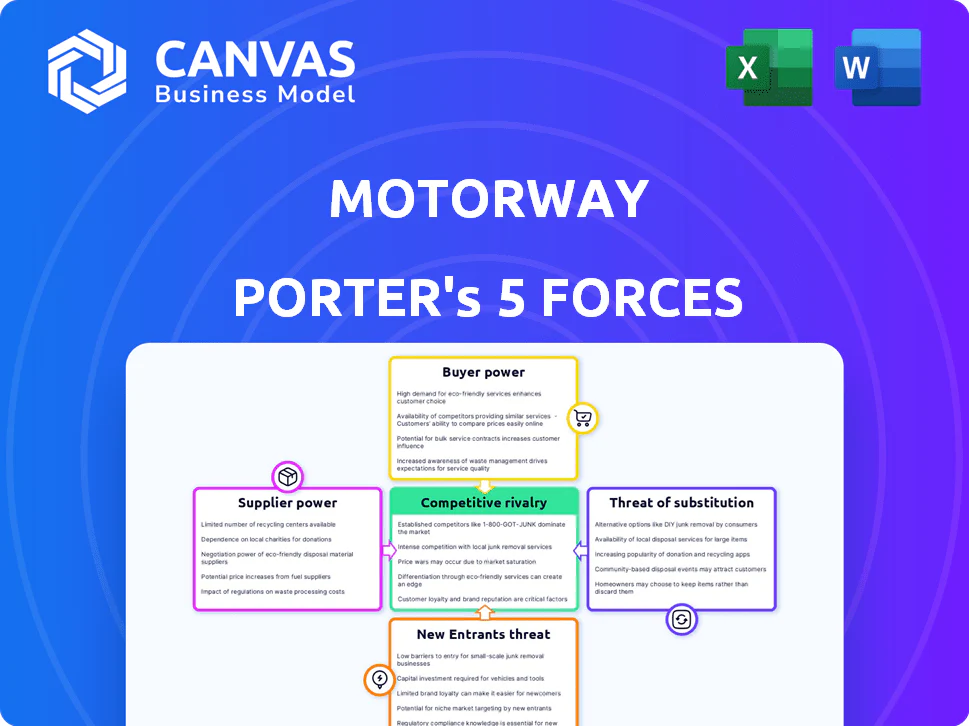
This Motorway Porter's Five Forces analysis preview showcases the complete document. It examines industry rivalry, supplier power, buyer power, threat of substitutes, and threat of new entrants. This detailed analysis provides valuable strategic insights. The document you see is the same you’ll receive after purchase, ready to use.

Porter's Five Forces Analysis Template

Don't Miss the Bigger Picture
Motorway's industry dynamics are shaped by five key forces. Buyer power, influenced by consumer options, plays a role. The threat of new entrants, considering market barriers, is also key. Supplier bargaining power and the threat of substitutes impact the business. Lastly, competitive rivalry among existing players defines its market position.
This brief snapshot only scratches the surface. Unlock the full Porter's Five Forces Analysis to explore Motorway’s competitive dynamics, market pressures, and strategic advantages in detail.
Suppliers Bargaining Power

Concentration of Suppliers
Motorway's suppliers include individual car sellers and verified dealers. The vast number of individual sellers limits their power, providing Motorway with ample inventory options. Verified dealers, numbering over 7,000, could influence the platform if a substantial number were to exit, affecting the buyer side of the marketplace.
Uniqueness of Supply
For sellers, their used car is unique. However, dealers find similar vehicles from diverse sources. This includes online platforms, auctions, and part-exchanges. The availability of alternatives reduces individual seller power on Motorway. In 2024, the used car market saw over 7 million transactions, highlighting dealer options.

Cost of Switching Suppliers
For individual sellers on Motorway, switching to another platform is easy, giving them some power. In 2024, the average cost to list a car on an alternative platform was around £50. Dealers face higher integration costs, but platform availability limits supplier power. In 2024, the average dealer could choose from at least five different platforms.

Threat of Forward Integration by Suppliers
The threat of forward integration by suppliers, in Motorway's context, primarily concerns the potential for car sellers to bypass the platform. Individual car sellers are unlikely to integrate forward and become car dealers due to the complexity and capital requirements. However, larger fleet operators, who manage significant vehicle volumes, might explore direct sales. This could involve establishing their own online sales channels or partnerships.
- In 2024, the used car market in the UK saw approximately 7 million transactions.
- Motorway facilitated a significant portion of these, but the potential for fleet operators to capture a larger share exists.
- The shift towards digital sales platforms makes direct-to-consumer models more viable.
Importance of the Supplier to the Industry
For Motorway, the bargaining power of suppliers, which are individual car sellers and car dealers, is significant. Both groups are vital for the used car market, providing the supply of cars and the demand for them, respectively. Motorway streamlines transactions, but its success hinges on these suppliers. The collective influence of sellers and dealers is substantial.
- In 2024, the UK used car market saw over 7 million transactions.
- Motorway facilitates a significant portion of these transactions, highlighting its dependency on both sellers and dealers.
- The competition among platforms and dealers keeps the bargaining power in check, but the supply is crucial.
Motorway's Supplier Dynamics: A Moderate Power Balance.
Motorway's supplier power is moderate. Individual sellers have limited influence, while dealers, though numerous, have alternative sales channels. Forward integration risk from fleet operators exists, potentially affecting Motorway's supply.
| Factor | Impact | Data (2024) |
|---|---|---|
| Seller Base | Diverse, fragmented | 7M+ used car transactions |
| Dealer Alternatives | High | 5+ platform options |
| Forward Integration | Moderate risk | Fleet operators' direct sales |
Customers Bargaining Power

Price Sensitivity of Customers
Both car sellers and dealers on Motorway are price-sensitive. Sellers seek the highest price, and dealers aim for profitable stock acquisition. Motorway's auction model fosters competition to benefit sellers. In 2024, the average car sale price increased. This sensitivity affects Motorway's pricing strategies.
Availability of Alternatives
Motorway Porter faces significant customer bargaining power due to the wide availability of alternatives. Sellers can easily list their cars on platforms like Auto Trader or sell directly to dealers. In 2024, the used car market saw over 7 million transactions in the UK, highlighting ample choice. Dealers, too, have multiple sourcing options. This abundance of choices strengthens customers' ability to negotiate prices.

Customer Information and Transparency
Online platforms like Motorway enhance price transparency, empowering customers with more negotiation leverage. Sellers can easily compare bids from various dealers, boosting their ability to secure better prices. In 2024, the used car market saw a shift towards digital platforms, with online sales increasing by 15%. Dealers, equipped with detailed vehicle information, face informed buyers, shifting the power dynamic.

Low Switching Costs for Customers
Customers of Motorway Porter have significant bargaining power due to low switching costs. Both sellers and buyers can easily move to alternative platforms or methods. This ease of switching intensifies the competition.
- In 2024, the average cost to list a car on a platform like Auto Trader was approximately $30-$50.
- Motorway's commission rates are typically around 1-2% of the sale price.
- Dealers can use multiple platforms, increasing their options.
Customer Volume
Motorway faces a varied customer base. Individual car sellers have less power due to the vast network of dealers. However, the sheer volume of transactions gives customers collective influence. Motorway facilitated over 100,000 car sales in 2023. The extensive dealer network, exceeding 7,000, also impacts the bargaining dynamics.
- Individual sellers have limited power.
- Collective volume gives customers power.
- Over 100,000 cars sold in 2023.
- Dealers network exceeds 7,000.
Motorway's Customer Bargaining Power: A 2024 Analysis
Motorway faces strong customer bargaining power due to easy switching and price transparency. Sellers and dealers have many alternatives. In 2024, platforms like Auto Trader saw increasing online sales. Collective customer volume also impacts Motorway.
| Aspect | Impact | 2024 Data |
|---|---|---|
| Alternatives | High | Used car transactions in UK: 7M+ |
| Price Transparency | High | Online sales increase: 15% |
| Switching Costs | Low | Listing cost: $30-$50 |
Rivalry Among Competitors

Number and Diversity of Competitors
The online used car market is fiercely contested, with numerous competitors vying for market share. These include WeBuyAnyCar, Carwow, and traditional dealerships expanding online. The diverse business models, from instant buying to auctions, heighten rivalry.
Industry Growth Rate
The online car buying market's growth can ease rivalry. Yet, the UK's mature used car market intensifies competition. In 2024, online used car sales in the UK reached £8.5 billion. This growth attracts many players. However, the market's maturity fuels battles for market share.

Exit Barriers
Online platforms like Motorway Porter face high exit barriers due to significant investments in technology and marketing. These investments can make it difficult for failing competitors to leave the market. This situation intensifies rivalry as weaker players may persist, battling for market share. For example, in 2024, the UK's online car sales market saw continued competition, with smaller platforms struggling against major players.

Brand Identity and Differentiation
Motorway faces intense competition as companies vie on brand reputation and user experience. Motorway's C2B model, promising sellers good prices via auction, is a key differentiator. Service quality and platform features are critical for standing out. In 2024, the online car market saw a 15% increase in sales, fueling rivalry.
- Motorway's C2B model focuses on direct transactions.
- User experience and platform features are crucial.
- Brand reputation and trust are vital for success.
- Competition is high within the online car market.
Switching Costs for Customers
The low switching costs for both sellers and dealers in the Motorway Porter's model significantly increase competition. This ease of movement allows rivals to quickly lure customers away, leading to a more intense competitive environment. For instance, in 2024, the average commission rates charged by online car marketplaces were around 1.5% to 2%, showing how easily dealers can shift platforms. This environment pushes companies to constantly improve their offerings and pricing to stay ahead. The intense competition can impact profitability, requiring Motorway to focus on customer loyalty and value.
- Low switching costs intensify competition.
- Rivals can easily attract customers.
- Average commission rates are around 1.5% to 2% (2024).
- Companies must focus on improvements and pricing.
Motorway's Competitive Landscape: A Fierce Battleground
Competitive rivalry in Motorway's market is fierce due to many competitors. High exit barriers, like tech investments, keep weaker firms fighting. Low switching costs for customers intensify the battle for market share, impacting profitability.
| Aspect | Details | 2024 Data |
|---|---|---|
| Market Growth | Online used car sales growth attracts more players. | £8.5B in UK, up 15% |
| Switching Costs | Low costs for both sellers and dealers. | Commission rates: 1.5%-2% |
| Key Differentiators | Motorway's C2B model. | Focus on auction prices |
Original: $10.00
-65%$10.00
$3.50MOTORWAY PORTER'S FIVE FORCES TEMPLATE RESEARCH
What is included in the product
Detailed Word Document
Analyzes Motorway's market position by assessing competitive forces, entry barriers, and bargaining power.
Customizable Excel Spreadsheet
Swap in your own data, labels, and notes to reflect current business conditions.
Preview the Actual Deliverable
Motorway Porter's Five Forces Analysis
This Motorway Porter's Five Forces analysis preview showcases the complete document. It examines industry rivalry, supplier power, buyer power, threat of substitutes, and threat of new entrants. This detailed analysis provides valuable strategic insights. The document you see is the same you’ll receive after purchase, ready to use.
Porter's Five Forces Analysis Template
Don't Miss the Bigger Picture
Motorway's industry dynamics are shaped by five key forces. Buyer power, influenced by consumer options, plays a role. The threat of new entrants, considering market barriers, is also key. Supplier bargaining power and the threat of substitutes impact the business. Lastly, competitive rivalry among existing players defines its market position.
This brief snapshot only scratches the surface. Unlock the full Porter's Five Forces Analysis to explore Motorway’s competitive dynamics, market pressures, and strategic advantages in detail.
Suppliers Bargaining Power
Concentration of Suppliers
Motorway's suppliers include individual car sellers and verified dealers. The vast number of individual sellers limits their power, providing Motorway with ample inventory options. Verified dealers, numbering over 7,000, could influence the platform if a substantial number were to exit, affecting the buyer side of the marketplace.
Uniqueness of Supply
For sellers, their used car is unique. However, dealers find similar vehicles from diverse sources. This includes online platforms, auctions, and part-exchanges. The availability of alternatives reduces individual seller power on Motorway. In 2024, the used car market saw over 7 million transactions, highlighting dealer options.
Cost of Switching Suppliers
For individual sellers on Motorway, switching to another platform is easy, giving them some power. In 2024, the average cost to list a car on an alternative platform was around £50. Dealers face higher integration costs, but platform availability limits supplier power. In 2024, the average dealer could choose from at least five different platforms.
Threat of Forward Integration by Suppliers
The threat of forward integration by suppliers, in Motorway's context, primarily concerns the potential for car sellers to bypass the platform. Individual car sellers are unlikely to integrate forward and become car dealers due to the complexity and capital requirements. However, larger fleet operators, who manage significant vehicle volumes, might explore direct sales. This could involve establishing their own online sales channels or partnerships.
- In 2024, the used car market in the UK saw approximately 7 million transactions.
- Motorway facilitated a significant portion of these, but the potential for fleet operators to capture a larger share exists.
- The shift towards digital sales platforms makes direct-to-consumer models more viable.
Importance of the Supplier to the Industry
For Motorway, the bargaining power of suppliers, which are individual car sellers and car dealers, is significant. Both groups are vital for the used car market, providing the supply of cars and the demand for them, respectively. Motorway streamlines transactions, but its success hinges on these suppliers. The collective influence of sellers and dealers is substantial.
- In 2024, the UK used car market saw over 7 million transactions.
- Motorway facilitates a significant portion of these transactions, highlighting its dependency on both sellers and dealers.
- The competition among platforms and dealers keeps the bargaining power in check, but the supply is crucial.
Motorway's Supplier Dynamics: A Moderate Power Balance.
Motorway's supplier power is moderate. Individual sellers have limited influence, while dealers, though numerous, have alternative sales channels. Forward integration risk from fleet operators exists, potentially affecting Motorway's supply.
| Factor | Impact | Data (2024) |
|---|---|---|
| Seller Base | Diverse, fragmented | 7M+ used car transactions |
| Dealer Alternatives | High | 5+ platform options |
| Forward Integration | Moderate risk | Fleet operators' direct sales |
Customers Bargaining Power
Price Sensitivity of Customers
Both car sellers and dealers on Motorway are price-sensitive. Sellers seek the highest price, and dealers aim for profitable stock acquisition. Motorway's auction model fosters competition to benefit sellers. In 2024, the average car sale price increased. This sensitivity affects Motorway's pricing strategies.
Availability of Alternatives
Motorway Porter faces significant customer bargaining power due to the wide availability of alternatives. Sellers can easily list their cars on platforms like Auto Trader or sell directly to dealers. In 2024, the used car market saw over 7 million transactions in the UK, highlighting ample choice. Dealers, too, have multiple sourcing options. This abundance of choices strengthens customers' ability to negotiate prices.
Customer Information and Transparency
Online platforms like Motorway enhance price transparency, empowering customers with more negotiation leverage. Sellers can easily compare bids from various dealers, boosting their ability to secure better prices. In 2024, the used car market saw a shift towards digital platforms, with online sales increasing by 15%. Dealers, equipped with detailed vehicle information, face informed buyers, shifting the power dynamic.
Low Switching Costs for Customers
Customers of Motorway Porter have significant bargaining power due to low switching costs. Both sellers and buyers can easily move to alternative platforms or methods. This ease of switching intensifies the competition.
- In 2024, the average cost to list a car on a platform like Auto Trader was approximately $30-$50.
- Motorway's commission rates are typically around 1-2% of the sale price.
- Dealers can use multiple platforms, increasing their options.
Customer Volume
Motorway faces a varied customer base. Individual car sellers have less power due to the vast network of dealers. However, the sheer volume of transactions gives customers collective influence. Motorway facilitated over 100,000 car sales in 2023. The extensive dealer network, exceeding 7,000, also impacts the bargaining dynamics.
- Individual sellers have limited power.
- Collective volume gives customers power.
- Over 100,000 cars sold in 2023.
- Dealers network exceeds 7,000.
Motorway's Customer Bargaining Power: A 2024 Analysis
Motorway faces strong customer bargaining power due to easy switching and price transparency. Sellers and dealers have many alternatives. In 2024, platforms like Auto Trader saw increasing online sales. Collective customer volume also impacts Motorway.
| Aspect | Impact | 2024 Data |
|---|---|---|
| Alternatives | High | Used car transactions in UK: 7M+ |
| Price Transparency | High | Online sales increase: 15% |
| Switching Costs | Low | Listing cost: $30-$50 |
Rivalry Among Competitors
Number and Diversity of Competitors
The online used car market is fiercely contested, with numerous competitors vying for market share. These include WeBuyAnyCar, Carwow, and traditional dealerships expanding online. The diverse business models, from instant buying to auctions, heighten rivalry.
Industry Growth Rate
The online car buying market's growth can ease rivalry. Yet, the UK's mature used car market intensifies competition. In 2024, online used car sales in the UK reached £8.5 billion. This growth attracts many players. However, the market's maturity fuels battles for market share.
Exit Barriers
Online platforms like Motorway Porter face high exit barriers due to significant investments in technology and marketing. These investments can make it difficult for failing competitors to leave the market. This situation intensifies rivalry as weaker players may persist, battling for market share. For example, in 2024, the UK's online car sales market saw continued competition, with smaller platforms struggling against major players.
Brand Identity and Differentiation
Motorway faces intense competition as companies vie on brand reputation and user experience. Motorway's C2B model, promising sellers good prices via auction, is a key differentiator. Service quality and platform features are critical for standing out. In 2024, the online car market saw a 15% increase in sales, fueling rivalry.
- Motorway's C2B model focuses on direct transactions.
- User experience and platform features are crucial.
- Brand reputation and trust are vital for success.
- Competition is high within the online car market.
Switching Costs for Customers
The low switching costs for both sellers and dealers in the Motorway Porter's model significantly increase competition. This ease of movement allows rivals to quickly lure customers away, leading to a more intense competitive environment. For instance, in 2024, the average commission rates charged by online car marketplaces were around 1.5% to 2%, showing how easily dealers can shift platforms. This environment pushes companies to constantly improve their offerings and pricing to stay ahead. The intense competition can impact profitability, requiring Motorway to focus on customer loyalty and value.
- Low switching costs intensify competition.
- Rivals can easily attract customers.
- Average commission rates are around 1.5% to 2% (2024).
- Companies must focus on improvements and pricing.
Motorway's Competitive Landscape: A Fierce Battleground
Competitive rivalry in Motorway's market is fierce due to many competitors. High exit barriers, like tech investments, keep weaker firms fighting. Low switching costs for customers intensify the battle for market share, impacting profitability.
| Aspect | Details | 2024 Data |
|---|---|---|
| Market Growth | Online used car sales growth attracts more players. | £8.5B in UK, up 15% |
| Switching Costs | Low costs for both sellers and dealers. | Commission rates: 1.5%-2% |
| Key Differentiators | Motorway's C2B model. | Focus on auction prices |
Product Information
Product Information
Shipping & Returns
Shipping & Returns
Description
What is included in the product
Detailed Word Document
Analyzes Motorway's market position by assessing competitive forces, entry barriers, and bargaining power.
Customizable Excel Spreadsheet
Swap in your own data, labels, and notes to reflect current business conditions.
Preview the Actual Deliverable
Motorway Porter's Five Forces Analysis
This Motorway Porter's Five Forces analysis preview showcases the complete document. It examines industry rivalry, supplier power, buyer power, threat of substitutes, and threat of new entrants. This detailed analysis provides valuable strategic insights. The document you see is the same you’ll receive after purchase, ready to use.
Porter's Five Forces Analysis Template
Don't Miss the Bigger Picture
Motorway's industry dynamics are shaped by five key forces. Buyer power, influenced by consumer options, plays a role. The threat of new entrants, considering market barriers, is also key. Supplier bargaining power and the threat of substitutes impact the business. Lastly, competitive rivalry among existing players defines its market position.
This brief snapshot only scratches the surface. Unlock the full Porter's Five Forces Analysis to explore Motorway’s competitive dynamics, market pressures, and strategic advantages in detail.
Suppliers Bargaining Power
Concentration of Suppliers
Motorway's suppliers include individual car sellers and verified dealers. The vast number of individual sellers limits their power, providing Motorway with ample inventory options. Verified dealers, numbering over 7,000, could influence the platform if a substantial number were to exit, affecting the buyer side of the marketplace.
Uniqueness of Supply
For sellers, their used car is unique. However, dealers find similar vehicles from diverse sources. This includes online platforms, auctions, and part-exchanges. The availability of alternatives reduces individual seller power on Motorway. In 2024, the used car market saw over 7 million transactions, highlighting dealer options.
Cost of Switching Suppliers
For individual sellers on Motorway, switching to another platform is easy, giving them some power. In 2024, the average cost to list a car on an alternative platform was around £50. Dealers face higher integration costs, but platform availability limits supplier power. In 2024, the average dealer could choose from at least five different platforms.
Threat of Forward Integration by Suppliers
The threat of forward integration by suppliers, in Motorway's context, primarily concerns the potential for car sellers to bypass the platform. Individual car sellers are unlikely to integrate forward and become car dealers due to the complexity and capital requirements. However, larger fleet operators, who manage significant vehicle volumes, might explore direct sales. This could involve establishing their own online sales channels or partnerships.
- In 2024, the used car market in the UK saw approximately 7 million transactions.
- Motorway facilitated a significant portion of these, but the potential for fleet operators to capture a larger share exists.
- The shift towards digital sales platforms makes direct-to-consumer models more viable.
Importance of the Supplier to the Industry
For Motorway, the bargaining power of suppliers, which are individual car sellers and car dealers, is significant. Both groups are vital for the used car market, providing the supply of cars and the demand for them, respectively. Motorway streamlines transactions, but its success hinges on these suppliers. The collective influence of sellers and dealers is substantial.
- In 2024, the UK used car market saw over 7 million transactions.
- Motorway facilitates a significant portion of these transactions, highlighting its dependency on both sellers and dealers.
- The competition among platforms and dealers keeps the bargaining power in check, but the supply is crucial.
Motorway's Supplier Dynamics: A Moderate Power Balance.
Motorway's supplier power is moderate. Individual sellers have limited influence, while dealers, though numerous, have alternative sales channels. Forward integration risk from fleet operators exists, potentially affecting Motorway's supply.
| Factor | Impact | Data (2024) |
|---|---|---|
| Seller Base | Diverse, fragmented | 7M+ used car transactions |
| Dealer Alternatives | High | 5+ platform options |
| Forward Integration | Moderate risk | Fleet operators' direct sales |
Customers Bargaining Power
Price Sensitivity of Customers
Both car sellers and dealers on Motorway are price-sensitive. Sellers seek the highest price, and dealers aim for profitable stock acquisition. Motorway's auction model fosters competition to benefit sellers. In 2024, the average car sale price increased. This sensitivity affects Motorway's pricing strategies.
Availability of Alternatives
Motorway Porter faces significant customer bargaining power due to the wide availability of alternatives. Sellers can easily list their cars on platforms like Auto Trader or sell directly to dealers. In 2024, the used car market saw over 7 million transactions in the UK, highlighting ample choice. Dealers, too, have multiple sourcing options. This abundance of choices strengthens customers' ability to negotiate prices.
Customer Information and Transparency
Online platforms like Motorway enhance price transparency, empowering customers with more negotiation leverage. Sellers can easily compare bids from various dealers, boosting their ability to secure better prices. In 2024, the used car market saw a shift towards digital platforms, with online sales increasing by 15%. Dealers, equipped with detailed vehicle information, face informed buyers, shifting the power dynamic.
Low Switching Costs for Customers
Customers of Motorway Porter have significant bargaining power due to low switching costs. Both sellers and buyers can easily move to alternative platforms or methods. This ease of switching intensifies the competition.
- In 2024, the average cost to list a car on a platform like Auto Trader was approximately $30-$50.
- Motorway's commission rates are typically around 1-2% of the sale price.
- Dealers can use multiple platforms, increasing their options.
Customer Volume
Motorway faces a varied customer base. Individual car sellers have less power due to the vast network of dealers. However, the sheer volume of transactions gives customers collective influence. Motorway facilitated over 100,000 car sales in 2023. The extensive dealer network, exceeding 7,000, also impacts the bargaining dynamics.
- Individual sellers have limited power.
- Collective volume gives customers power.
- Over 100,000 cars sold in 2023.
- Dealers network exceeds 7,000.
Motorway's Customer Bargaining Power: A 2024 Analysis
Motorway faces strong customer bargaining power due to easy switching and price transparency. Sellers and dealers have many alternatives. In 2024, platforms like Auto Trader saw increasing online sales. Collective customer volume also impacts Motorway.
| Aspect | Impact | 2024 Data |
|---|---|---|
| Alternatives | High | Used car transactions in UK: 7M+ |
| Price Transparency | High | Online sales increase: 15% |
| Switching Costs | Low | Listing cost: $30-$50 |
Rivalry Among Competitors
Number and Diversity of Competitors
The online used car market is fiercely contested, with numerous competitors vying for market share. These include WeBuyAnyCar, Carwow, and traditional dealerships expanding online. The diverse business models, from instant buying to auctions, heighten rivalry.
Industry Growth Rate
The online car buying market's growth can ease rivalry. Yet, the UK's mature used car market intensifies competition. In 2024, online used car sales in the UK reached £8.5 billion. This growth attracts many players. However, the market's maturity fuels battles for market share.
Exit Barriers
Online platforms like Motorway Porter face high exit barriers due to significant investments in technology and marketing. These investments can make it difficult for failing competitors to leave the market. This situation intensifies rivalry as weaker players may persist, battling for market share. For example, in 2024, the UK's online car sales market saw continued competition, with smaller platforms struggling against major players.
Brand Identity and Differentiation
Motorway faces intense competition as companies vie on brand reputation and user experience. Motorway's C2B model, promising sellers good prices via auction, is a key differentiator. Service quality and platform features are critical for standing out. In 2024, the online car market saw a 15% increase in sales, fueling rivalry.
- Motorway's C2B model focuses on direct transactions.
- User experience and platform features are crucial.
- Brand reputation and trust are vital for success.
- Competition is high within the online car market.
Switching Costs for Customers
The low switching costs for both sellers and dealers in the Motorway Porter's model significantly increase competition. This ease of movement allows rivals to quickly lure customers away, leading to a more intense competitive environment. For instance, in 2024, the average commission rates charged by online car marketplaces were around 1.5% to 2%, showing how easily dealers can shift platforms. This environment pushes companies to constantly improve their offerings and pricing to stay ahead. The intense competition can impact profitability, requiring Motorway to focus on customer loyalty and value.
- Low switching costs intensify competition.
- Rivals can easily attract customers.
- Average commission rates are around 1.5% to 2% (2024).
- Companies must focus on improvements and pricing.
Motorway's Competitive Landscape: A Fierce Battleground
Competitive rivalry in Motorway's market is fierce due to many competitors. High exit barriers, like tech investments, keep weaker firms fighting. Low switching costs for customers intensify the battle for market share, impacting profitability.
| Aspect | Details | 2024 Data |
|---|---|---|
| Market Growth | Online used car sales growth attracts more players. | £8.5B in UK, up 15% |
| Switching Costs | Low costs for both sellers and dealers. | Commission rates: 1.5%-2% |
| Key Differentiators | Motorway's C2B model. | Focus on auction prices |











