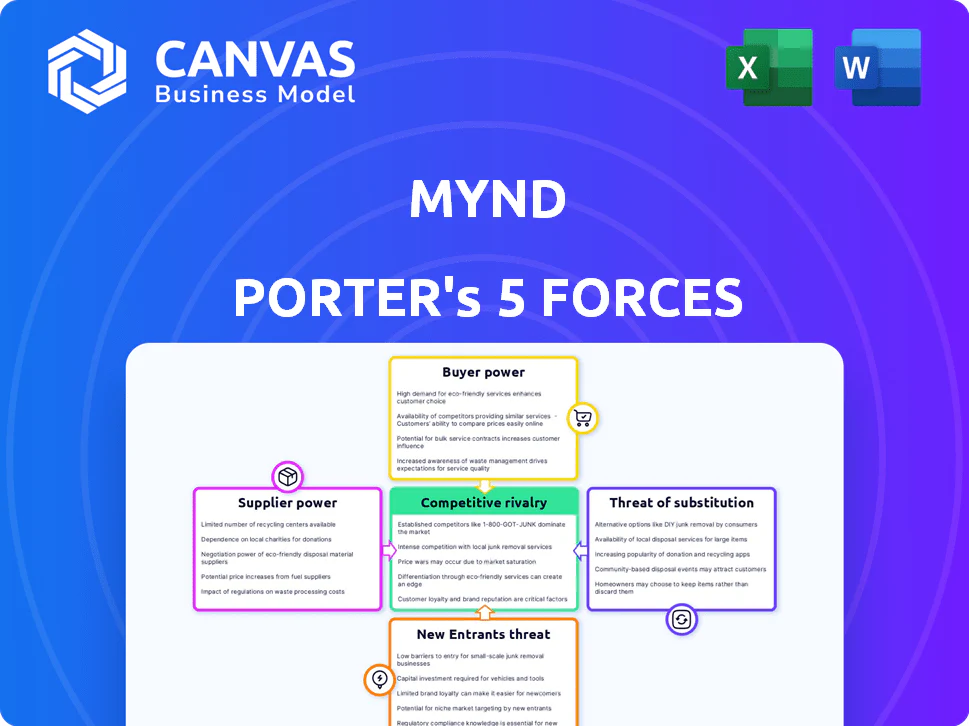
MYND PORTER'S FIVE FORCES TEMPLATE RESEARCH
What is included in the product
 Detailed Word Document
Tailored exclusively for Mynd, analyzing its position within its competitive landscape.

 Customizable Excel Spreadsheet
Effortlessly compare scenarios with duplicate tabs reflecting diverse market dynamics.
Full Version Awaits
Mynd Porter's Five Forces Analysis
This Mynd Porter's Five Forces analysis preview is the complete document. You're seeing the same professionally crafted analysis file you'll receive instantly after purchase.

Porter's Five Forces Analysis Template

Elevate Your Analysis with the Complete Porter's Five Forces Analysis
Mynd operates within a dynamic real estate market, facing various competitive forces. The bargaining power of buyers and suppliers significantly impacts Mynd's profitability. The threat of new entrants, along with substitute products, creates additional pressure. Competitive rivalry among existing players is also intense.
Unlock key insights into Mynd’s industry forces—from buyer power to substitute threats—and use this knowledge to inform strategy or investment decisions.
Suppliers Bargaining Power

Availability of Maintenance and Repair Services
Mynd's operational success hinges on maintenance and repair services from vendors and in-house teams. Limited availability of skilled labor or materials gives suppliers leverage to raise prices, impacting Mynd's profitability. For example, in 2024, construction material costs rose by 5-7% due to supply chain issues. This can significantly affect Mynd's expenses.
Technology Providers
Mynd relies heavily on technology for property management, tenant screening, and payments. Key tech providers, offering essential software, have moderate bargaining power. For instance, the property management software market, valued at $1.6 billion in 2024, sees competition, yet dominant players can influence pricing and terms. The bargaining power of suppliers depends on the criticality of the software and the availability of substitutes.

Access to Property Data and Listing Platforms
Mynd relies on property data and listing platforms to source rental properties. These providers, like Zillow and Apartments.com, can influence Mynd's operations. For example, Zillow's revenue in 2024 was $4.6 billion, indicating significant market power. They can control pricing or restrict access, impacting Mynd's ability to find and market properties effectively.

Financial Service Providers
Mynd, in its role providing financial services, faces the bargaining power of suppliers like banks that offer mortgages or handle financial transactions. These financial institutions dictate terms, interest rates, and fees, influencing Mynd's profitability. The dependence on these suppliers, especially in areas like mortgage assistance and rent collection, gives them considerable leverage. This is further complicated by the varying costs of services across different providers.
- Mortgage rates in the U.S. averaged around 6.87% in late 2024, showing the impact of supplier pricing.
- Rent collection services can charge fees ranging from 1% to 10% of the collected rent, affecting Mynd's revenue.
- Banks and financial institutions control access to capital and the terms of financial products, influencing Mynd's service offerings.
Insurance Providers
Mynd relies on a partner for insurance coverage, making it subject to the bargaining power of these providers. Insurance companies dictate premiums and coverage terms, directly influencing Mynd's operational costs and service offerings. The influence of insurance providers is substantial, especially in property management where risk is significant. This dynamic can affect Mynd's profitability and competitiveness in the market.
- Insurance costs rose by approximately 15% in 2024 due to increased property values and risk assessments.
- Partner insurance companies' market share in the property insurance sector is around 10%.
- Coverage terms are standardized across the industry, offering limited negotiation scope.
- Mynd has to allocate 5% of its revenue to insurance costs.
Supplier Power Dynamics: Mynd's Cost Challenges
Mynd faces supplier bargaining power across various areas, affecting its costs and operations. Suppliers of materials, technology, and property data platforms can influence pricing and terms. Financial institutions and insurance providers also exert considerable leverage.
This power impacts Mynd's profitability and competitiveness. For example, mortgage rates and insurance costs directly affect financial performance.
Understanding these supplier dynamics is crucial for Mynd's strategic planning and financial management, especially in a volatile market.
| Supplier Type | Impact on Mynd | 2024 Data |
|---|---|---|
| Construction Materials | Increased Costs | Costs rose 5-7% |
| Property Software | Pricing Influence | Market: $1.6B |
| Listing Platforms | Market Access | Zillow Revenue: $4.6B |
| Financial Institutions | Terms & Rates | Mortgage Rate: 6.87% |
| Insurance Providers | Cost & Coverage | Costs rose 15% |
Customers Bargaining Power

Large Portfolio Owners
Mynd's large portfolio clients, like institutional investors, wield significant bargaining power. These clients, representing a substantial volume of business, can negotiate more favorable terms. For instance, in 2024, institutional investors accounted for roughly 30% of the single-family rental market, giving them leverage in service agreements.
Tenant Options
Mynd's success hinges on tenant satisfaction, even though owners are direct clients. Tenants can switch rentals or management firms, influencing Mynd's service demand. In 2024, national vacancy rates hovered around 6.3%, giving tenants some leverage. Competitive markets amplify this power, affecting Mynd's owner retention strategies.

Availability of Alternative Property Management Options
Property owners can choose from many property management options, boosting their leverage. In 2024, the property management market saw over 10,000 companies. This competition gives owners choices. Self-management platforms like Avail offer further alternatives.

Demand for Single-Family Rentals
The demand for single-family rentals significantly impacts the bargaining power of property owners. High demand, coupled with limited inventory, strengthens property owners' positions when selecting property management services. This dynamic allows them to negotiate more favorable terms and conditions.
- In 2024, the single-family rental market saw a continued rise in demand, with occupancy rates remaining high.
- Areas with strong job growth and population increases often experience the most significant demand, giving owners more leverage.
- Conversely, markets with oversupply may see property owners with less bargaining power, as they compete for tenants.
- Property management fees can be influenced by the balance of supply and demand.
Price Sensitivity
Property owners often show price sensitivity regarding property management fees, particularly in a competitive landscape. This sensitivity empowers customers with bargaining power, enabling them to negotiate better terms. A recent study indicates that about 60% of property owners actively seek lower management fees. This is even more pronounced in areas with a high supply of rental properties.
- Fee Negotiation: Owners can negotiate management fees.
- Competitive Quotes: Owners can get quotes from various firms.
- Switching Costs: Low switching costs enhance bargaining power.
- Market Knowledge: Informed owners can negotiate better.
Mynd's Bargaining Power: Who Holds the Cards?
Mynd faces customer bargaining power from various sources. Institutional investors and property owners leverage their size and choices to negotiate terms. Tenant satisfaction and market dynamics further influence this power.
High demand in single-family rentals strengthens owner positions, affecting fee negotiations. Conversely, oversupply weakens owner leverage. Property owners' price sensitivity, especially in competitive markets, boosts their bargaining power.
| Customer Type | Bargaining Power Drivers | Impact on Mynd |
|---|---|---|
| Institutional Investors | Volume of Business, Market Share (30% in 2024) | Negotiate favorable terms |
| Tenants | Vacancy Rates (6.3% in 2024), Switching Costs | Influence service demand |
| Property Owners | Competition (10,000+ firms in 2024), Demand vs. Supply | Fee negotiation, choice of services |
Rivalry Among Competitors

Number and Diversity of Competitors
The property management market is highly competitive. Numerous companies, from local firms to tech-driven platforms, compete for market share. In 2024, the single-family rental market saw increased competition, with over 100,000 property management companies operating in the U.S.
Market Growth Rate
The property management software market is growing, reflecting a dynamic competitive environment. A higher market growth rate often brings in new entrants, increasing competition. In 2024, the global property management software market was valued at $1.4 billion, with a projected CAGR of 10.5% from 2024 to 2032.

Differentiation of Services
Mynd faces competition based on tech, services, pricing, and customer service. Mynd differentiates via its tech platform and services.

Switching Costs for Customers
Switching costs play a crucial role in the intensity of competitive rivalry. The ease with which property owners can change property management companies directly impacts the competitive landscape. High switching costs, such as lengthy contracts or significant setup fees, can diminish rivalry by making it harder for customers to move. Conversely, low switching costs intensify competition, as property owners can easily switch providers.
- In 2024, the average contract length for property management services was 12 months, indicating moderate switching costs.
- Setup fees, ranging from $100 to $500, present a barrier to switching, though not a prohibitive one.
- Companies offering flexible month-to-month contracts experience higher rivalry due to lower switching costs.
- Customer satisfaction scores and reviews significantly influence the ease of switching, with negative reviews increasing the likelihood of turnover.
Market Concentration
Market concentration in property management varies, with some larger companies holding substantial market share. This can influence how competitive the industry is. For instance, the top 10 property management companies in the U.S. collectively manage a significant portion of the total rental units. The dominance of a few firms can either intensify or lessen competitive rivalry, depending on their strategies.
- In 2024, the top 10 property management companies managed approximately 30% of all U.S. rental units.
- Companies with large market shares often have more pricing power.
- Smaller companies may struggle to compete on price or service.
- Market concentration levels can vary by region.
Property Management: Fierce Competition in 2024
Competitive rivalry in property management is intense due to numerous players and low switching costs. The market features both large and small firms, impacting pricing and service strategies. In 2024, the fragmented market structure fostered dynamic competition.
| Factor | Impact | 2024 Data |
|---|---|---|
| Contract Lengths | Switching Costs | 12 months average |
| Setup Fees | Barriers to Entry | $100-$500 |
| Market Concentration | Pricing Power | Top 10 managed 30% of units |
Original: $10.00
-65%$10.00
$3.50MYND PORTER'S FIVE FORCES TEMPLATE RESEARCH
What is included in the product
Detailed Word Document
Tailored exclusively for Mynd, analyzing its position within its competitive landscape.
Customizable Excel Spreadsheet
Effortlessly compare scenarios with duplicate tabs reflecting diverse market dynamics.
Full Version Awaits
Mynd Porter's Five Forces Analysis
This Mynd Porter's Five Forces analysis preview is the complete document. You're seeing the same professionally crafted analysis file you'll receive instantly after purchase.
Porter's Five Forces Analysis Template
Elevate Your Analysis with the Complete Porter's Five Forces Analysis
Mynd operates within a dynamic real estate market, facing various competitive forces. The bargaining power of buyers and suppliers significantly impacts Mynd's profitability. The threat of new entrants, along with substitute products, creates additional pressure. Competitive rivalry among existing players is also intense.
Unlock key insights into Mynd’s industry forces—from buyer power to substitute threats—and use this knowledge to inform strategy or investment decisions.
Suppliers Bargaining Power
Availability of Maintenance and Repair Services
Mynd's operational success hinges on maintenance and repair services from vendors and in-house teams. Limited availability of skilled labor or materials gives suppliers leverage to raise prices, impacting Mynd's profitability. For example, in 2024, construction material costs rose by 5-7% due to supply chain issues. This can significantly affect Mynd's expenses.
Technology Providers
Mynd relies heavily on technology for property management, tenant screening, and payments. Key tech providers, offering essential software, have moderate bargaining power. For instance, the property management software market, valued at $1.6 billion in 2024, sees competition, yet dominant players can influence pricing and terms. The bargaining power of suppliers depends on the criticality of the software and the availability of substitutes.
Access to Property Data and Listing Platforms
Mynd relies on property data and listing platforms to source rental properties. These providers, like Zillow and Apartments.com, can influence Mynd's operations. For example, Zillow's revenue in 2024 was $4.6 billion, indicating significant market power. They can control pricing or restrict access, impacting Mynd's ability to find and market properties effectively.
Financial Service Providers
Mynd, in its role providing financial services, faces the bargaining power of suppliers like banks that offer mortgages or handle financial transactions. These financial institutions dictate terms, interest rates, and fees, influencing Mynd's profitability. The dependence on these suppliers, especially in areas like mortgage assistance and rent collection, gives them considerable leverage. This is further complicated by the varying costs of services across different providers.
- Mortgage rates in the U.S. averaged around 6.87% in late 2024, showing the impact of supplier pricing.
- Rent collection services can charge fees ranging from 1% to 10% of the collected rent, affecting Mynd's revenue.
- Banks and financial institutions control access to capital and the terms of financial products, influencing Mynd's service offerings.
Insurance Providers
Mynd relies on a partner for insurance coverage, making it subject to the bargaining power of these providers. Insurance companies dictate premiums and coverage terms, directly influencing Mynd's operational costs and service offerings. The influence of insurance providers is substantial, especially in property management where risk is significant. This dynamic can affect Mynd's profitability and competitiveness in the market.
- Insurance costs rose by approximately 15% in 2024 due to increased property values and risk assessments.
- Partner insurance companies' market share in the property insurance sector is around 10%.
- Coverage terms are standardized across the industry, offering limited negotiation scope.
- Mynd has to allocate 5% of its revenue to insurance costs.
Supplier Power Dynamics: Mynd's Cost Challenges
Mynd faces supplier bargaining power across various areas, affecting its costs and operations. Suppliers of materials, technology, and property data platforms can influence pricing and terms. Financial institutions and insurance providers also exert considerable leverage.
This power impacts Mynd's profitability and competitiveness. For example, mortgage rates and insurance costs directly affect financial performance.
Understanding these supplier dynamics is crucial for Mynd's strategic planning and financial management, especially in a volatile market.
| Supplier Type | Impact on Mynd | 2024 Data |
|---|---|---|
| Construction Materials | Increased Costs | Costs rose 5-7% |
| Property Software | Pricing Influence | Market: $1.6B |
| Listing Platforms | Market Access | Zillow Revenue: $4.6B |
| Financial Institutions | Terms & Rates | Mortgage Rate: 6.87% |
| Insurance Providers | Cost & Coverage | Costs rose 15% |
Customers Bargaining Power
Large Portfolio Owners
Mynd's large portfolio clients, like institutional investors, wield significant bargaining power. These clients, representing a substantial volume of business, can negotiate more favorable terms. For instance, in 2024, institutional investors accounted for roughly 30% of the single-family rental market, giving them leverage in service agreements.
Tenant Options
Mynd's success hinges on tenant satisfaction, even though owners are direct clients. Tenants can switch rentals or management firms, influencing Mynd's service demand. In 2024, national vacancy rates hovered around 6.3%, giving tenants some leverage. Competitive markets amplify this power, affecting Mynd's owner retention strategies.
Availability of Alternative Property Management Options
Property owners can choose from many property management options, boosting their leverage. In 2024, the property management market saw over 10,000 companies. This competition gives owners choices. Self-management platforms like Avail offer further alternatives.
Demand for Single-Family Rentals
The demand for single-family rentals significantly impacts the bargaining power of property owners. High demand, coupled with limited inventory, strengthens property owners' positions when selecting property management services. This dynamic allows them to negotiate more favorable terms and conditions.
- In 2024, the single-family rental market saw a continued rise in demand, with occupancy rates remaining high.
- Areas with strong job growth and population increases often experience the most significant demand, giving owners more leverage.
- Conversely, markets with oversupply may see property owners with less bargaining power, as they compete for tenants.
- Property management fees can be influenced by the balance of supply and demand.
Price Sensitivity
Property owners often show price sensitivity regarding property management fees, particularly in a competitive landscape. This sensitivity empowers customers with bargaining power, enabling them to negotiate better terms. A recent study indicates that about 60% of property owners actively seek lower management fees. This is even more pronounced in areas with a high supply of rental properties.
- Fee Negotiation: Owners can negotiate management fees.
- Competitive Quotes: Owners can get quotes from various firms.
- Switching Costs: Low switching costs enhance bargaining power.
- Market Knowledge: Informed owners can negotiate better.
Mynd's Bargaining Power: Who Holds the Cards?
Mynd faces customer bargaining power from various sources. Institutional investors and property owners leverage their size and choices to negotiate terms. Tenant satisfaction and market dynamics further influence this power.
High demand in single-family rentals strengthens owner positions, affecting fee negotiations. Conversely, oversupply weakens owner leverage. Property owners' price sensitivity, especially in competitive markets, boosts their bargaining power.
| Customer Type | Bargaining Power Drivers | Impact on Mynd |
|---|---|---|
| Institutional Investors | Volume of Business, Market Share (30% in 2024) | Negotiate favorable terms |
| Tenants | Vacancy Rates (6.3% in 2024), Switching Costs | Influence service demand |
| Property Owners | Competition (10,000+ firms in 2024), Demand vs. Supply | Fee negotiation, choice of services |
Rivalry Among Competitors
Number and Diversity of Competitors
The property management market is highly competitive. Numerous companies, from local firms to tech-driven platforms, compete for market share. In 2024, the single-family rental market saw increased competition, with over 100,000 property management companies operating in the U.S.
Market Growth Rate
The property management software market is growing, reflecting a dynamic competitive environment. A higher market growth rate often brings in new entrants, increasing competition. In 2024, the global property management software market was valued at $1.4 billion, with a projected CAGR of 10.5% from 2024 to 2032.
Differentiation of Services
Mynd faces competition based on tech, services, pricing, and customer service. Mynd differentiates via its tech platform and services.
Switching Costs for Customers
Switching costs play a crucial role in the intensity of competitive rivalry. The ease with which property owners can change property management companies directly impacts the competitive landscape. High switching costs, such as lengthy contracts or significant setup fees, can diminish rivalry by making it harder for customers to move. Conversely, low switching costs intensify competition, as property owners can easily switch providers.
- In 2024, the average contract length for property management services was 12 months, indicating moderate switching costs.
- Setup fees, ranging from $100 to $500, present a barrier to switching, though not a prohibitive one.
- Companies offering flexible month-to-month contracts experience higher rivalry due to lower switching costs.
- Customer satisfaction scores and reviews significantly influence the ease of switching, with negative reviews increasing the likelihood of turnover.
Market Concentration
Market concentration in property management varies, with some larger companies holding substantial market share. This can influence how competitive the industry is. For instance, the top 10 property management companies in the U.S. collectively manage a significant portion of the total rental units. The dominance of a few firms can either intensify or lessen competitive rivalry, depending on their strategies.
- In 2024, the top 10 property management companies managed approximately 30% of all U.S. rental units.
- Companies with large market shares often have more pricing power.
- Smaller companies may struggle to compete on price or service.
- Market concentration levels can vary by region.
Property Management: Fierce Competition in 2024
Competitive rivalry in property management is intense due to numerous players and low switching costs. The market features both large and small firms, impacting pricing and service strategies. In 2024, the fragmented market structure fostered dynamic competition.
| Factor | Impact | 2024 Data |
|---|---|---|
| Contract Lengths | Switching Costs | 12 months average |
| Setup Fees | Barriers to Entry | $100-$500 |
| Market Concentration | Pricing Power | Top 10 managed 30% of units |
Product Information
Product Information
Shipping & Returns
Shipping & Returns
Description
What is included in the product
Detailed Word Document
Tailored exclusively for Mynd, analyzing its position within its competitive landscape.
Customizable Excel Spreadsheet
Effortlessly compare scenarios with duplicate tabs reflecting diverse market dynamics.
Full Version Awaits
Mynd Porter's Five Forces Analysis
This Mynd Porter's Five Forces analysis preview is the complete document. You're seeing the same professionally crafted analysis file you'll receive instantly after purchase.
Porter's Five Forces Analysis Template
Elevate Your Analysis with the Complete Porter's Five Forces Analysis
Mynd operates within a dynamic real estate market, facing various competitive forces. The bargaining power of buyers and suppliers significantly impacts Mynd's profitability. The threat of new entrants, along with substitute products, creates additional pressure. Competitive rivalry among existing players is also intense.
Unlock key insights into Mynd’s industry forces—from buyer power to substitute threats—and use this knowledge to inform strategy or investment decisions.
Suppliers Bargaining Power
Availability of Maintenance and Repair Services
Mynd's operational success hinges on maintenance and repair services from vendors and in-house teams. Limited availability of skilled labor or materials gives suppliers leverage to raise prices, impacting Mynd's profitability. For example, in 2024, construction material costs rose by 5-7% due to supply chain issues. This can significantly affect Mynd's expenses.
Technology Providers
Mynd relies heavily on technology for property management, tenant screening, and payments. Key tech providers, offering essential software, have moderate bargaining power. For instance, the property management software market, valued at $1.6 billion in 2024, sees competition, yet dominant players can influence pricing and terms. The bargaining power of suppliers depends on the criticality of the software and the availability of substitutes.
Access to Property Data and Listing Platforms
Mynd relies on property data and listing platforms to source rental properties. These providers, like Zillow and Apartments.com, can influence Mynd's operations. For example, Zillow's revenue in 2024 was $4.6 billion, indicating significant market power. They can control pricing or restrict access, impacting Mynd's ability to find and market properties effectively.
Financial Service Providers
Mynd, in its role providing financial services, faces the bargaining power of suppliers like banks that offer mortgages or handle financial transactions. These financial institutions dictate terms, interest rates, and fees, influencing Mynd's profitability. The dependence on these suppliers, especially in areas like mortgage assistance and rent collection, gives them considerable leverage. This is further complicated by the varying costs of services across different providers.
- Mortgage rates in the U.S. averaged around 6.87% in late 2024, showing the impact of supplier pricing.
- Rent collection services can charge fees ranging from 1% to 10% of the collected rent, affecting Mynd's revenue.
- Banks and financial institutions control access to capital and the terms of financial products, influencing Mynd's service offerings.
Insurance Providers
Mynd relies on a partner for insurance coverage, making it subject to the bargaining power of these providers. Insurance companies dictate premiums and coverage terms, directly influencing Mynd's operational costs and service offerings. The influence of insurance providers is substantial, especially in property management where risk is significant. This dynamic can affect Mynd's profitability and competitiveness in the market.
- Insurance costs rose by approximately 15% in 2024 due to increased property values and risk assessments.
- Partner insurance companies' market share in the property insurance sector is around 10%.
- Coverage terms are standardized across the industry, offering limited negotiation scope.
- Mynd has to allocate 5% of its revenue to insurance costs.
Supplier Power Dynamics: Mynd's Cost Challenges
Mynd faces supplier bargaining power across various areas, affecting its costs and operations. Suppliers of materials, technology, and property data platforms can influence pricing and terms. Financial institutions and insurance providers also exert considerable leverage.
This power impacts Mynd's profitability and competitiveness. For example, mortgage rates and insurance costs directly affect financial performance.
Understanding these supplier dynamics is crucial for Mynd's strategic planning and financial management, especially in a volatile market.
| Supplier Type | Impact on Mynd | 2024 Data |
|---|---|---|
| Construction Materials | Increased Costs | Costs rose 5-7% |
| Property Software | Pricing Influence | Market: $1.6B |
| Listing Platforms | Market Access | Zillow Revenue: $4.6B |
| Financial Institutions | Terms & Rates | Mortgage Rate: 6.87% |
| Insurance Providers | Cost & Coverage | Costs rose 15% |
Customers Bargaining Power
Large Portfolio Owners
Mynd's large portfolio clients, like institutional investors, wield significant bargaining power. These clients, representing a substantial volume of business, can negotiate more favorable terms. For instance, in 2024, institutional investors accounted for roughly 30% of the single-family rental market, giving them leverage in service agreements.
Tenant Options
Mynd's success hinges on tenant satisfaction, even though owners are direct clients. Tenants can switch rentals or management firms, influencing Mynd's service demand. In 2024, national vacancy rates hovered around 6.3%, giving tenants some leverage. Competitive markets amplify this power, affecting Mynd's owner retention strategies.
Availability of Alternative Property Management Options
Property owners can choose from many property management options, boosting their leverage. In 2024, the property management market saw over 10,000 companies. This competition gives owners choices. Self-management platforms like Avail offer further alternatives.
Demand for Single-Family Rentals
The demand for single-family rentals significantly impacts the bargaining power of property owners. High demand, coupled with limited inventory, strengthens property owners' positions when selecting property management services. This dynamic allows them to negotiate more favorable terms and conditions.
- In 2024, the single-family rental market saw a continued rise in demand, with occupancy rates remaining high.
- Areas with strong job growth and population increases often experience the most significant demand, giving owners more leverage.
- Conversely, markets with oversupply may see property owners with less bargaining power, as they compete for tenants.
- Property management fees can be influenced by the balance of supply and demand.
Price Sensitivity
Property owners often show price sensitivity regarding property management fees, particularly in a competitive landscape. This sensitivity empowers customers with bargaining power, enabling them to negotiate better terms. A recent study indicates that about 60% of property owners actively seek lower management fees. This is even more pronounced in areas with a high supply of rental properties.
- Fee Negotiation: Owners can negotiate management fees.
- Competitive Quotes: Owners can get quotes from various firms.
- Switching Costs: Low switching costs enhance bargaining power.
- Market Knowledge: Informed owners can negotiate better.
Mynd's Bargaining Power: Who Holds the Cards?
Mynd faces customer bargaining power from various sources. Institutional investors and property owners leverage their size and choices to negotiate terms. Tenant satisfaction and market dynamics further influence this power.
High demand in single-family rentals strengthens owner positions, affecting fee negotiations. Conversely, oversupply weakens owner leverage. Property owners' price sensitivity, especially in competitive markets, boosts their bargaining power.
| Customer Type | Bargaining Power Drivers | Impact on Mynd |
|---|---|---|
| Institutional Investors | Volume of Business, Market Share (30% in 2024) | Negotiate favorable terms |
| Tenants | Vacancy Rates (6.3% in 2024), Switching Costs | Influence service demand |
| Property Owners | Competition (10,000+ firms in 2024), Demand vs. Supply | Fee negotiation, choice of services |
Rivalry Among Competitors
Number and Diversity of Competitors
The property management market is highly competitive. Numerous companies, from local firms to tech-driven platforms, compete for market share. In 2024, the single-family rental market saw increased competition, with over 100,000 property management companies operating in the U.S.
Market Growth Rate
The property management software market is growing, reflecting a dynamic competitive environment. A higher market growth rate often brings in new entrants, increasing competition. In 2024, the global property management software market was valued at $1.4 billion, with a projected CAGR of 10.5% from 2024 to 2032.
Differentiation of Services
Mynd faces competition based on tech, services, pricing, and customer service. Mynd differentiates via its tech platform and services.
Switching Costs for Customers
Switching costs play a crucial role in the intensity of competitive rivalry. The ease with which property owners can change property management companies directly impacts the competitive landscape. High switching costs, such as lengthy contracts or significant setup fees, can diminish rivalry by making it harder for customers to move. Conversely, low switching costs intensify competition, as property owners can easily switch providers.
- In 2024, the average contract length for property management services was 12 months, indicating moderate switching costs.
- Setup fees, ranging from $100 to $500, present a barrier to switching, though not a prohibitive one.
- Companies offering flexible month-to-month contracts experience higher rivalry due to lower switching costs.
- Customer satisfaction scores and reviews significantly influence the ease of switching, with negative reviews increasing the likelihood of turnover.
Market Concentration
Market concentration in property management varies, with some larger companies holding substantial market share. This can influence how competitive the industry is. For instance, the top 10 property management companies in the U.S. collectively manage a significant portion of the total rental units. The dominance of a few firms can either intensify or lessen competitive rivalry, depending on their strategies.
- In 2024, the top 10 property management companies managed approximately 30% of all U.S. rental units.
- Companies with large market shares often have more pricing power.
- Smaller companies may struggle to compete on price or service.
- Market concentration levels can vary by region.
Property Management: Fierce Competition in 2024
Competitive rivalry in property management is intense due to numerous players and low switching costs. The market features both large and small firms, impacting pricing and service strategies. In 2024, the fragmented market structure fostered dynamic competition.
| Factor | Impact | 2024 Data |
|---|---|---|
| Contract Lengths | Switching Costs | 12 months average |
| Setup Fees | Barriers to Entry | $100-$500 |
| Market Concentration | Pricing Power | Top 10 managed 30% of units |











